Argentine Batistuta’s Hat-Trick Crown Faces World Cup Poachers in 2026
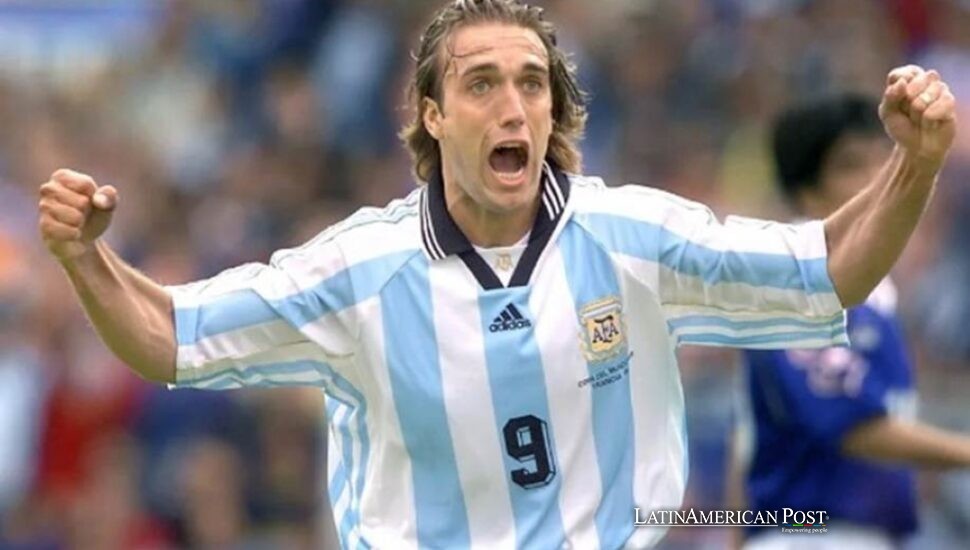
As the 2026 World Cup opens across the United States, Mexico, and Canada, Gabriel Batistuta’s rare record faces its fiercest chase yet, exposing how football memory, expanded formats, and Latin American pride collide in modern soccer’s global theater.
Batigol Still Owns the Room
Some records sit in the archives. Others sit at the table, elbows out, refusing to move.
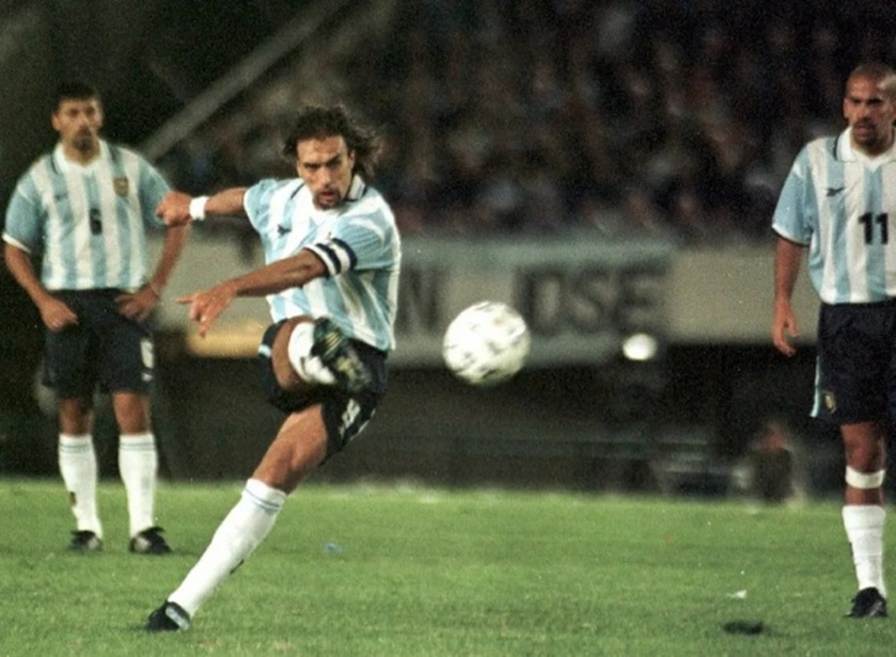
Gabriel Batistuta’s World Cup distinction belongs to the second kind. According to an EFE report, the Argentine striker remains the only player to score hat-tricks in two different editions of the FIFA World Cup, a piece of football history that has survived three decades of tactical revolutions, golden generations, video review, sports science, and the industrial expansion of the global game.
It began on June 21, 1994, in Boston, when Argentina faced Greece, and Batistuta tore through the match with the clean violence of a man who seemed born to finish arguments. Four years later, on the same date, June 21, 1998, he did it again against Jamaica in Paris. Different World Cup. Same punishment. Same name.
That double act made “Batigol” more than a nickname. It became a certificate of precision, the kind Latin American football loves because it carries both beauty and brutality. Batistuta was not the dribbler who made defenders dizzy for sport. He was the forward who made goalkeepers look abandoned. There was something almost rural in his directness, something forged in grass, dust, meat, pride, and thunder.
Now, as the ball begins rolling in the 2026 tournament across North America, four elite forwards arrive with one World Cup hat-trick already in their records and a chance to pull up a chair beside him: England’s Harry Kane, Portugal’s Gonçalo Ramos, France’s Kylian Mbappé, and Portugal’s Cristiano Ronaldo. One more three-goal performance from any of them would equal Batistuta’s mark.
The chase is not only statistical. It is generational. It asks whether an old South American monument can withstand the new football economy, where attackers are optimized, tournaments are expanded, and records that once felt mythical suddenly seem scheduled for demolition.
The Format Opens the Gate
The 2026 World Cup changes the weather around the record. With 48 nations and a new round of 32, there will be more matches, more mismatches, more knockout drama, more late-game chaos, and more chances for an elite striker to turn a vulnerable defense into a historical footnote.
That does not cheapen the chase, exactly. But it changes its conditions.
Batistuta’s feat came in the denser old world of World Cups, when the tournament had fewer teams and less room for statistical inflation. The average number of hat-tricks per World Cup is only a little above two, EFE noted, which makes everyone feel like a flare against football’s natural resistance. The exception was Switzerland 1954, a wild, open tournament that produced eight hat-tricks in only 26 matches. At the other extreme sits Germany 2006, the tournament of tactical order and conservative chalkboards, the only modern edition without a single three-goal game.
That range tells the real story. Hat-tricks are not just about scorers. They are about eras.
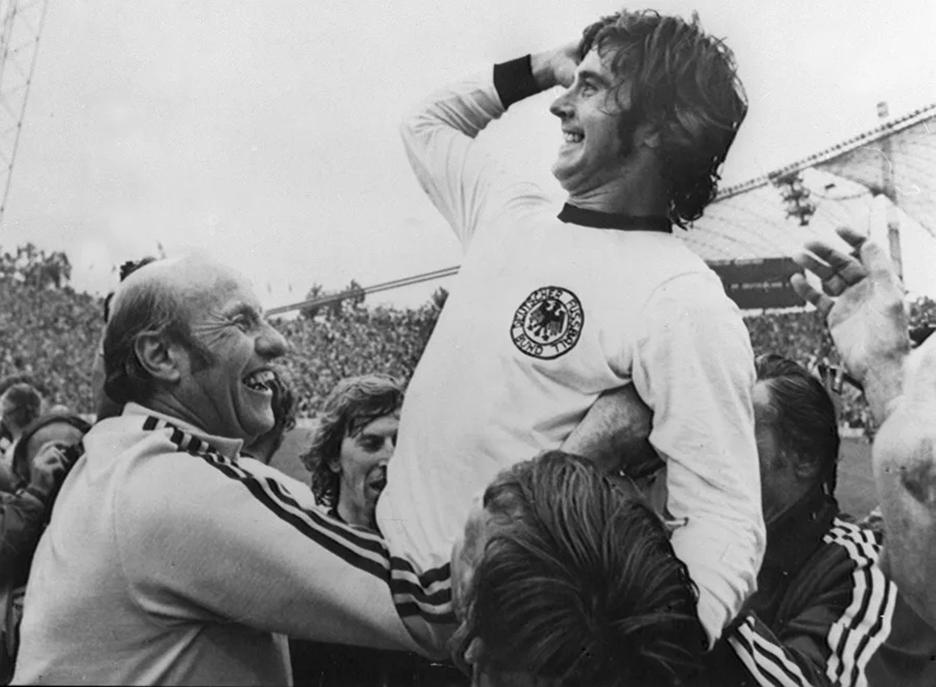
Kocsis and Just Fontaine each scored two hat-tricks in a single tournament, in 1954 and 1958. Gerd Müller joined that club in Mexico in 1970. Those were tournaments of more open spaces, different defensive habits, and forwards who lived closer to the penalty area than to a heat map. Today’s great attackers are faster, stronger, and better conditioned. Still, they face teams that spend months studying their body angles and pressing triggers.
Still, 2026 may tilt the field back toward abundance. The expanded format creates more entry points for history. A favorite drawn against a debutant. A late penalty when a defense is already broken. A knockout match that stretches open because nobody can hide behind a draw. This is how records fall now, not always through romance, sometimes through structure.
Mbappé carries the sharpest possibility. If the Real Madrid forward scores three against Senegal in France’s opener, he would not only match Batistuta’s two-World-Cup hat-trick achievement. He would also equal Sándor Kocsis and Gerd Müller as one of the few players to score hat-tricks in consecutive World Cup matches. That is the kind of sentence that turns a group-stage game into a museum room before kickoff.
Cristiano Ronaldo’s pursuit is different, heavier with age and theater. Kane’s is English, burdened by the nation’s habit of turning hope into national weather. Ramos remains the surprise knife, already capable of exploding on a World Cup night. Each man brings a different kind of threat to Batistuta’s solitude.
Latin America Guards Its Ghosts
For Argentina, and for Latin America more broadly, Batistuta’s record is not merely Argentine property. It belongs to an older continental belief that football greatness can come from the periphery and force the center to memorize its name.
Latin America has always understood records differently. In Europe, they are often cataloged as achievements. In Latin America, they become an inheritance. They are repeated by fathers, uncles, taxi drivers, barbers, radio hosts, and old men leaning near kiosks who still remember where they stood when the ball hit the net. A statistic becomes family furniture.
That is why Batistuta’s record still matters in a sport now dominated by club brands, streaming rights, Gulf money, super agents, and global merch. It represents a time when the World Cup was the great equalizer, when a player from Reconquista could turn himself into a planetary fact without needing to become a lifestyle platform first.
Yet Latin America should also read the threat honestly. The region’s football memory is immense, but memory alone does not defend influence. Europe owns much of the infrastructure. The expanded tournament is shaped by global markets. The next record may be broken by a superstar whose club career, sponsorship portfolio, and digital reach dwarf anything Batistuta’s generation could imagine.
And still, the Argentine’s achievement has a stubborn purity. Two World Cups. Same date. Three goals each time. Greece in Boston. Jamaica in Paris. The repetition feels almost literary, as if the calendar itself agreed to mark him.
If Mbappé, Kane, Ramos, or Ronaldo join him, the record will not die. It will become a conversation. Batistuta will no longer sit alone, but he will remain the first man at the table, the one who arrived before the tournament grew larger, before football became quite so measured, before every finish was instantly sliced into content.
That is the beauty of this chase. It is not a funeral for an Argentine record. It is a reminder that Latin America’s football ghosts still make the living run harder.
The World Cup begins again. Somewhere, the new poachers are loading their boots. Batigol’s chair is still warm.
Also Read: Mexican Maracaná Dreams of Pele Magic in Tepito’s World Cup