Venezuela Quakes Move Families While Rubble Marches Toward the Sea
After Venezuela’s deadliest earthquakes in a century, survivors are fleeing shattered homes, families are challenging military restrictions, and La Guaira faces 1.2 million tons of debris that could decide whether reconstruction becomes renewal, displacement, or another slow-moving public health disaster.
A Home Left Standing, a Family Still Uprooted
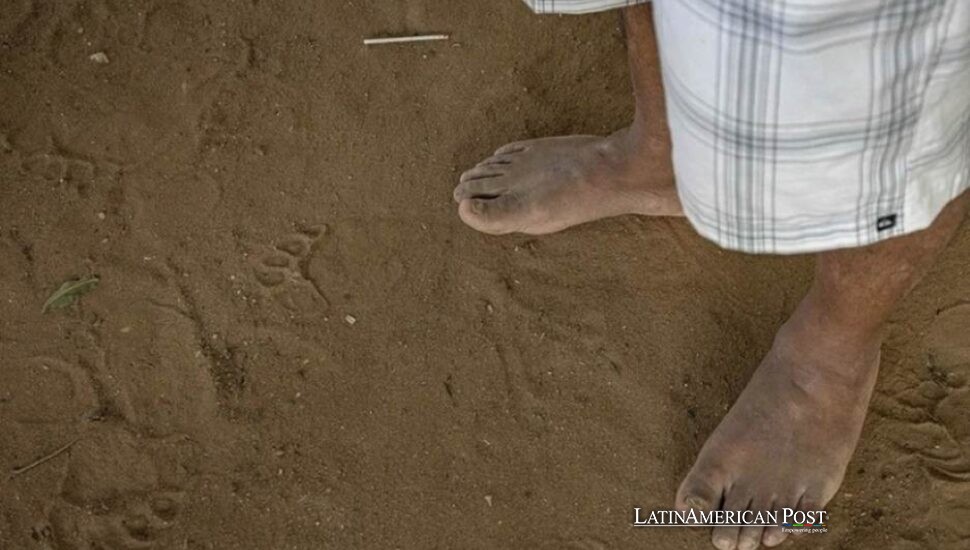
Ten days after the walls shook in Caracas, Urumán Urdaneta carried his family west to Maracaibo, roughly 700 kilometers away. The trip crossed a harder distance, from the life they knew to the one his wife could tolerate.
Their house in El Junquito had not collapsed during the twin earthquakes on June 24, which were measured at magnitudes 7.2 and 7.5. One wall fell. Everyone survived. Inside the house, however, survival did not feel like safety.
Liliana Machado, Urdaneta’s wife, began fainting almost daily. She could not sleep. At times, she struggled to breathe. The family was watching television when the shaking began. Their youngest child, 18, has a disability. Urdaneta grabbed him and held on.
“It was not a tremor,” the 63-year-old mechanic told EFE. He remembered being pulled one way, then the other, for what felt like an impossibly long time. Panic entered before the movement stopped. Later, a doctor advised him to remove Machado from the place that had become a trigger.
“So, for my wife’s health, we left,” he told EFE.
Disaster displacement can begin without a government order or a collapsed roof. It begins when a bedroom becomes unbearable, when every truck resembles an aftershock, when the body rejects an engineer’s reassurance. A structure may remain habitable while memory makes it unlivable. In that way, one family’s choice mirrors a wider pattern.
Maracaibo should have offered the comfort of return. The couple has Wayuu roots in Zulia, and the city is where they were born. Instead, Urdaneta feels like a stranger. Machado does not want to return to Caracas. She is receiving psychological treatment. Their children, ages 26, 22, and 18, have friendships and pieces of childhood in the capital. Urdaneta wants his auto maintenance work again. So the family escaped danger but entered a quieter argument over whose recovery determines where home will be.
That argument is unfolding across Venezuela. Government figures show that 17,907 people lost their housing. As updates shifted, the number living in temporary camps rose from 16,891 people across 87 sites to 17,266 across 89 sites. The changing totals show a population still moving, being registered, and deciding whether evacuation is temporary or the start of another internal migration.
Zulia has received families from the disaster zone, including people who refuse to return to La Guaira. Yet Maracaibo, the symbolic capital of Venezuela’s oil wealth, cannot promise reliable water, electricity, gas or internet. The irony is familiar across Latin America: territories that generated national wealth often endure weak services. Kinship networks substitute for the state, but relatives cannot repair a grid or create jobs.
The Rubble Is Becoming a Second Disaster
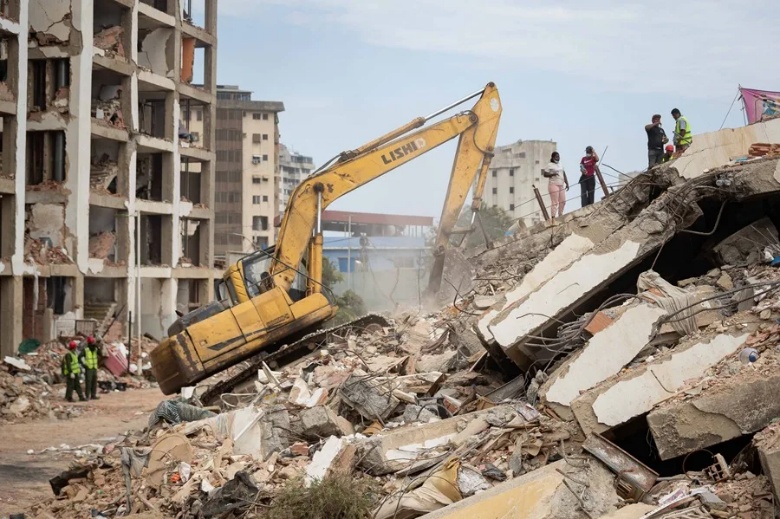
In La Guaira, the catastrophe now has a weight: about 1.2 million tons. A government and United Nations Development Program assessment attributes roughly 900,000 tons to collapsed concrete and steel structures, with another 332,000 tons coming from furniture, appliances, and personal belongings.
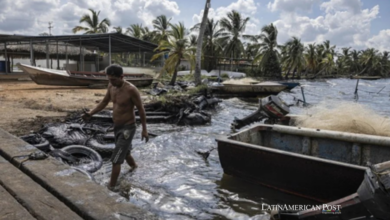
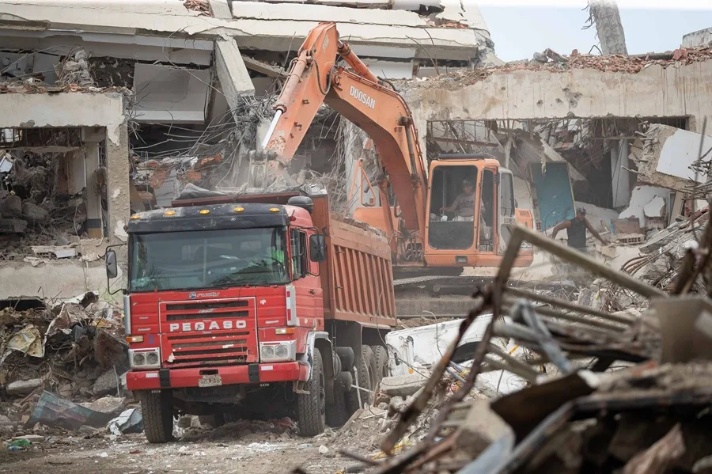
Along the road between Tanaguarena and Naiguatá, EFE saw mounds pushed toward the roadside near the Caribbean. Concrete sits beside twisted reinforcing bars, clothing, identity documents, furniture, wires, and photographs. Men search through the piles. “Debris” sounds inert. Here it is: housing, biography, evidence, and possible contamination mixed together.
Engineer José Arreaza told EFE that authorities have few immediate alternatives. Trucks cannot repeatedly haul material to Caracas without losing hours and consuming scarce fuel. Engineer Roberto Porciello noted that rubble was handled similarly after the 1999 landslide that devastated La Guaira, then widely known as Vargas.
That precedent should unsettle more than reassure. The 1999 disaster remains embedded in regional memory because reconstruction exposed Venezuela’s habit of improvisation. Twenty-seven years later, the coastline is again being asked to absorb what the state cannot quickly sort, transport, or store. The pattern helps explain the urgency around current rubble management.
The UNDP recommends separating, recycling, and reusing materials where possible. Joaquín Benítez, sustainability director at Andrés Bello Catholic University, told EFE that about 60 percent could be recycled for reconstruction. Venezuela’s Environment Ministry says it deployed a crusher to make construction aggregate, though officials have not disclosed where it operates or what it has processed.
The promise comes with limits. Porciello cautions that damaged material should not be reused in structural components. Benítez stresses that every building has a different risk profile. Residential ruins can contain crushed vehicles leaking fuel and oil. Commercial sites may hold chemicals. Electronics, machinery, metals, masonry and household goods require separation, not a bulldozer’s single sweep.
Temporary storage should sit away from rivers and the sea, ideally on impermeable ground. Instead, necessity is pushing mixed waste toward the water. That is how an earthquake becomes a longer environmental emergency, through runoff, dust, asbestos exposure, and contaminated soil. Turkey’s 2023 earthquake offered a warning: communities still reported hazardous debris after authorities said most rubble had been collected.
Recovery Tests Power as Much as Engineering
Rubble management is never only technical. It decides whose neighborhood is cleared first, whose possessions become waste, which contracts are awarded, and how much scrutiny survives an emergency. In Venezuela, strained by economic contraction, sanctions, migration, and political conflict, the earthquakes expose logistical shortages and a reflex toward centralized control.
Acting President Delcy Rodríguez met national and international officials to coordinate removal, including an Israeli military officer advising on debris management. Yet the government has not publicly detailed the operating rules. That silence matters while families are still searching for the missing.
More than two weeks after the earthquakes, Eva Belkrin told reporters that military officials had blocked machinery and volunteers from entering the collapsed Celtamar building, where she was searching for her two daughters. “We have not been allowed in,” she said, pleading for the chance to look for relatives alive or dead. Other volunteers continued searching elsewhere, including for a 9-year-old boy named Fabio beneath Residencias Tahití.
The state may cite safety, chain of command, or unstable structures. Families hear time passing. In disaster zones, authority earns legitimacy through transparent decisions and visible competence. When soldiers stand between relatives and rubble without a clear explanation, security begins to look like obstruction. The mistrust can outlast reconstruction, and that strain carries into the next stage of recovery.
The official toll reached at least 4,118 deaths and 16,740 injuries, with 86,794 families receiving assistance. Each update makes the disaster easier to summarize and harder to comprehend. Numbers create scale, but flatten the private aftermath: Machado fainting in Maracaibo, Urdaneta looking for work, Belkrin waiting outside a ruin, families in camps deciding whether to rebuild near the same mountain and sea. Those scenes show what the totals cannot.
Venezuela now faces two recoveries. One is visible: roads cleared, concrete crushed, camps closed, buildings raised. The other is slower and less obedient to schedules: trauma care, livelihoods, family choices, trust in institutions, and the right to know what happened beneath a collapsed home. Both recoveries must move together for reconstruction to mean more than repair.
Urdaneta would return to Caracas. His wife cannot imagine it. Between those truths lies Venezuela’s reconstruction: not restoring June 23, but deciding where this family’s life will end up, and building a life that no longer feels as if the ground is about to move.
Also Read: Costa Rica’s Crime War Meets a Judiciary Ready to Resist