Cuba Digs In as Washington’s War Talk Meets Island Grit
After Maduro’s capture in Caracas, Havana revived an old Cold War doctrine, betting that Cuba’s tired tanks matter less than memory, terrain and a population trained to make any U.S. occupation bleed politically, slowly and loudly at home again today.
The Sirens of January
The alarms in Havana did not sound like theory. They sounded on Jan. 3 inside the Palace of the Revolution, where the news arrived with the blunt force of a changed map: U.S. special forces had captured Nicolás Maduro in Caracas, and 32 Cubans had died in the operation.
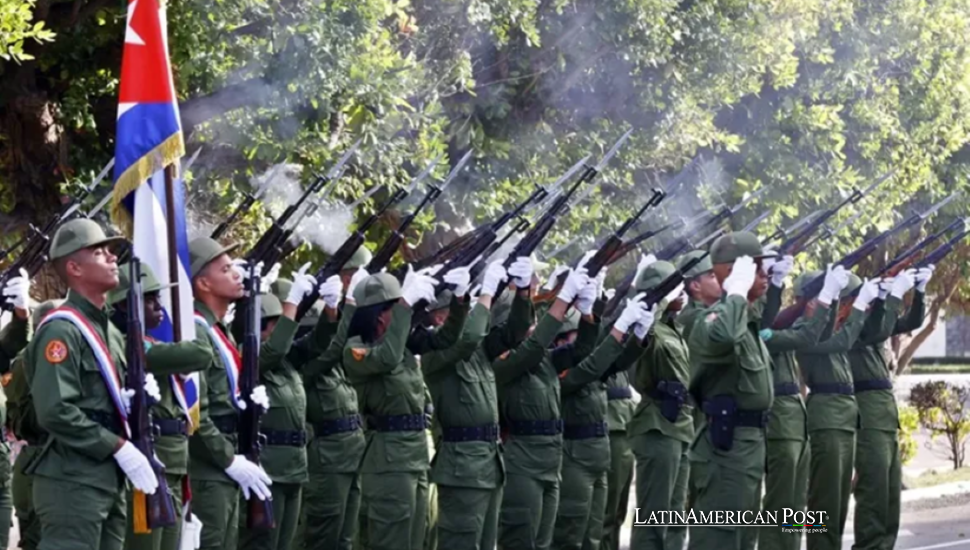
Soon afterward, the Cuban state began doing what it has often done when history knocks too loudly. It returned to ritual, discipline, and memory. Military preparations were reviewed each week in different parts of the island, not only by professional soldiers but also by the broader population. The old idea was hauled back into the daylight, dusted off and spoken again in the language of endurance: the “War of All the People.”
That concept, designed in the 1980s, is not really a plan to defeat the United States in a conventional war. Havana knows the arithmetic. It is a doctrine of attrition, closer to Vietnam than to a parade-ground fantasy, built on the premise that an invasion may be easy to start and brutally difficult to inhabit. It imagines neighborhoods, fields, roads, and families as part of the battlefield. It treats occupation not as a military fact but as a political wound.
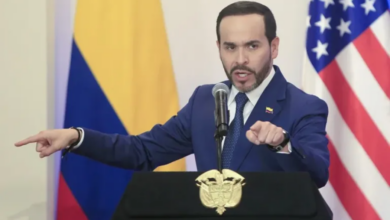
“Here there will be neither surprise nor defeat,” Cuban President Miguel Díaz-Canel warned in early May, according to EFE.
The phrase landed with the familiar cadence of Cuban officialdom, part defiance, part theater, part catechism. Yet behind it sits a hard calculation. Cuba cannot match Washington’s aircraft, satellites, ships or precision weapons. It can only try to make those advantages less decisive once power touches soil.
Old Weapons, Older Instincts
The United States has kept the military option alive in its maximum-pressure campaign against Cuba, using it as a threat and a signal. The message became sharper when U.S. War Secretary Pete Hegseth recently traveled to the Guantánamo military base, on Cuba’s eastern end, and warned Havana not to invite “the kind of confrontation they not only do not want, but could not withstand.”
That sentence captures the asymmetry. It also misses something about Cuba. The island has spent more than six decades converting weakness into political grammar. Scarcity has been narrated as resistance. Isolation has been framed as sovereignty. The old American cars still moving through Havana are not just postcard nostalgia. They are also an accidental metaphor for the military machine, Siemon Wezeman, a researcher at the Stockholm International Peace Research Institute, described to EFE.
Cuba’s weapons, he said in an EFE interview, are “the military equivalent of the American cars from the 1950s that still run in Cuba.”
His assessment is unsentimental. Cuba’s armed forces are outdated. Much of their equipment dates from the 1970s and 1980s. SIPRI’s last documented arms delivery to Cuba was 22 years ago. Its air and naval forces are, in Wezeman’s words to EFE, “extremely small,” with no serious comparison to U.S. material, technological and human capacity.
The land forces look somewhat better, but only by regional standards and only on paper. The tanks are two or three generations old, Wezeman told EFE, and barely half may be able to move. Irregular infantry could be numerous, but numbers do not turn small arms into air defense, nor can patriotism stop cruise missiles.
This is the central Cuban paradox. The island’s deterrence is not based on winning. It is based on forcing Washington to ask whether winning would mean anything after the first week. A Venezuela-style strike, Wezeman argued to EFE, would face little opposition in Cuba. Venezuela had more advanced military technology and still did not resist. But an invasion of the island, he added, could become “a dirty war.” Then comes the question that matters most in Washington: Is it worth it?
The Price of Occupation
That question is not only military. It is cultural, historical, and domestic. Cuba is not an abstract hostile platform 90 miles from Florida. It is the oldest obsession in U.S. hemispheric policy. In this place, the Monroe Doctrine, Cold War humiliation, exile politics, revolution, and Caribbean nationalism keep talking over one another. Any intervention would not begin on a blank page. It would begin in 1898, in 1959, in the Bay of Pigs, in the Missile Crisis, in Mariel, in the Special Period, in Miami living rooms and Havana ration lines.
That is why the “War of All the People” is less an order of battle than an appeal to national biography. It asks Cubans whether they are willing to fight not for the comfort of the present, which is thin, but for the dignity of being free from occupation. Wezeman put the crucial uncertainty plainly to EFE: “What willingness for war do they have?”
It is the right question. Cuba’s economy is exhausted. Migration has emptied households. Daily life is marked by power outages, shortages, and the emotional fatigue of a permanent state of emergency. The revolutionary epic still has power, but it competes with private exhaustion. A militia doctrine depends on belief, and belief is harder to maintain when the refrigerator is empty.
Still, Washington would be foolish to confuse hardship with surrender. Latin America has repeatedly shown that military superiority does not automatically translate into political control. The region remembers occupations, coups, counterinsurgencies, and sanctions not as policy instruments but as family histories. In Cuba, that memory is organized by the state, but it is not invented from nothing.
The drone reports add another layer of danger. Claims that Havana bought 300 military drones from Russia and Iran remain doubtful, Wezeman told EFE, and their usefulness against the United States is uncertain. A strike toward Florida, even a limited one, would be catastrophic for Cuba because it would hand Washington the justification it seeks. Such an act, Wezeman said to EFE, would be “Pearl Harbor.”
That is the abyss Havana must avoid as it promises defiance. It needs to look costly enough to deter invasion, but not reckless enough to invite one. It must mobilize the population without proving that Washington’s fears are right. The island’s strategy is therefore built on a narrow bridge between vulnerability and theater.
In the end, Cuba’s message is not that it can defeat the United States. It is that defeat on Cuban soil might not look clean. It might look like alleys, funerals, blackouts, militias, propaganda, resistance, and years of consequences. That may be the island’s real weapon: not modern steel, but the promise that any occupier would inherit a country trained to make history expensive.
Also Read: Latin America Quakes Reveal History’s Fault Lines Beneath Today’s Rubble