Malvinas Return to the OAS Table Without Moving an Inch

At the OAS assembly in Panama, Latin America again urged Argentina and Britain to negotiate over the Malvinas, reviving a dispute where maps, memories, islanders, fisheries, and military power collide. At the same time, diplomacy keeps circling the same cold South Atlantic waters.
Diplomacy Repeats, but Power Does Not
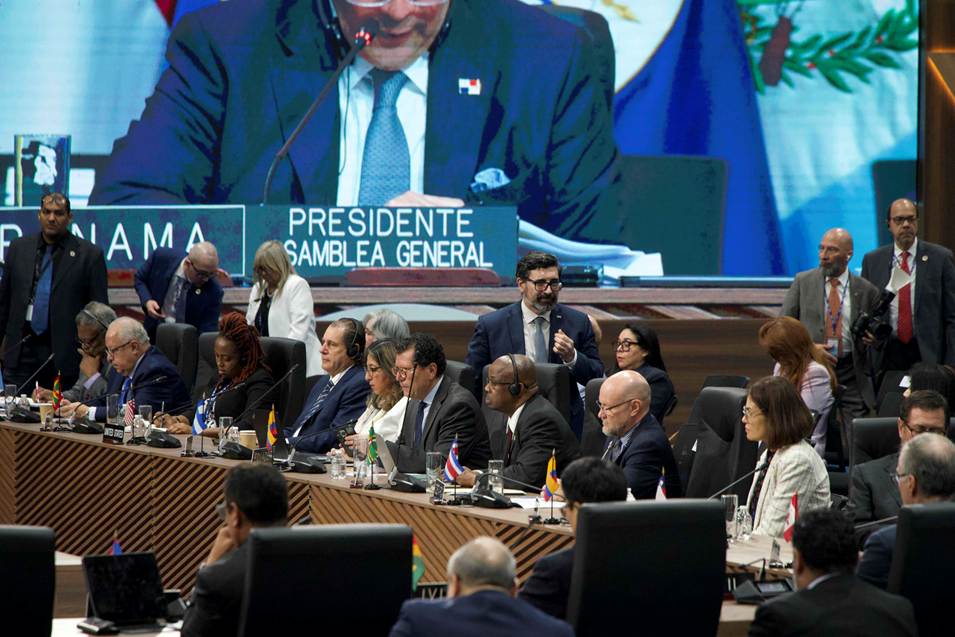
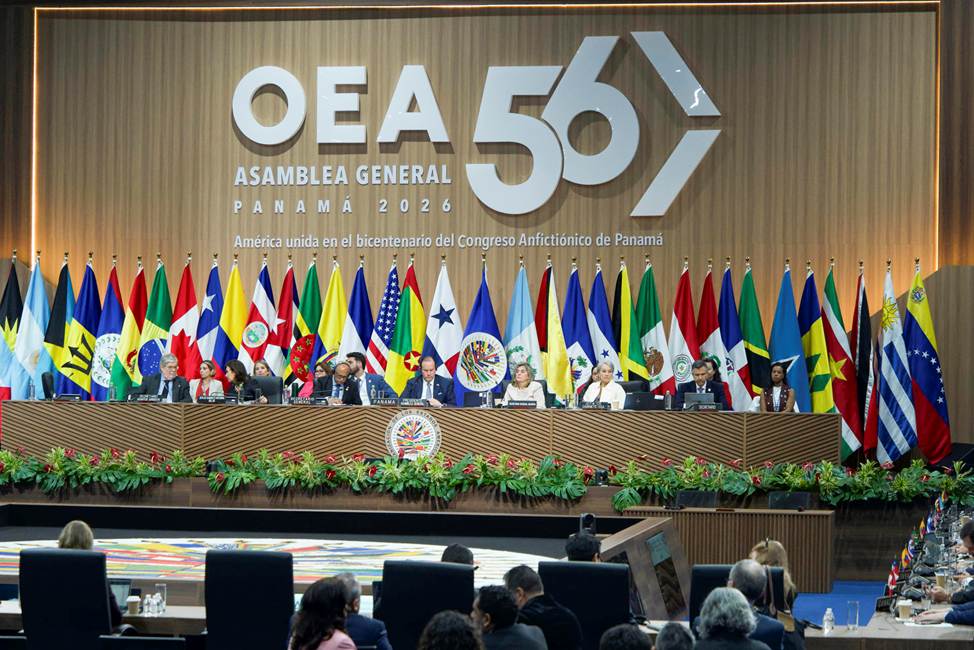
The language approved in Panama was careful, worn smooth by repetition. During the fourth plenary session of the Organization of American States’ 56th General Assembly, member governments called on Argentina and the United Kingdom to resume sovereignty negotiations “as soon as possible”. They praised Buenos Aires for seeking a peaceful solution. The OAS promised to keep the Malvinas question on the agenda until a settlement is reached. EFE reported that the organization again described it as a matter of hemispheric concern, following resolutions dating to 1988.
Nothing in those sentences changes who patrols the islands, issues fishing licenses, stamps passports, or runs the government in Stanley. Britain remains the administering power. Yet such rituals are how weaker states prevent history from being filed away as settled. Argentina cannot compel London to negotiate. Latin America can refuse to let British control become universally accepted.
Argentina’s undersecretary for foreign policy, Juan Manuel Navarro, told the assembly that his country remained committed to peaceful dispute settlement, effective multilateralism, and an international order based on rules. He urged Britain to meet the same standard on decolonization. OAS Secretary General Albert Ramdin called the dispute unresolved and a pending decolonization issue in the hemisphere, according to EFE. U.S. official Michael Kozak restated Washington’s neutrality while acknowledging British de facto administration.
That formulation sounds balanced, but power is not. One side holds the territory, maintains its defenses, and can wait. The other possesses a claim, regional backing, and declarations. In disputes like this, delay is not neutral. Time strengthens institutions, property relations, and identity on the ground. Every year without talks makes the status quo more ordinary, even as the OAS insists it is not final.
This is the first lesson for Latin America. Multilateral support can preserve legitimacy without producing leverage. The region has repeatedly backed Argentina in the OAS, the G77 plus China, and United Nations forums, but that solidarity has rarely carried an economic or strategic cost. It is easy to approve language. It is harder to alter defense ties or trade calculations.
Two Principles, One Unmoved Map
The deadlock begins with competing histories. Argentina says it inherited Spain’s South Atlantic territories after independence and that British forces broke its territorial integrity in 1833 by removing Argentine authorities. Britain says it reasserted an earlier claim and has administered the islands continuously since then, apart from the Argentine occupation during the 1982 war. United Nations Resolution 2065 recognized a sovereignty dispute and invited both governments to negotiate a peaceful solution while taking into account the island population’s interests.
Then came 1982, the wound inside the argument. Argentina’s military dictatorship invaded, and Britain retook the islands after a ten-week war. The defeat cost lives and fused the national claim to a public rejection of military adventurism. Since democracy returned in 1983, governments of sharply different ideologies have maintained the claim while treating peaceful diplomacy as the only legitimate route.
For families of Argentine conscripts, the islands can mean a son who came home altered, or did not come home. For many island residents, the same year is remembered as invasion, fear, occupation, and liberation by British forces. Those experiences do not cancel one another. They explain why legal formulas arrive in homes as memory rather than abstraction.
The people living on the islands are not a historical footnote. The 2021 population was 3,662, with about 40 percent native-born and residents arriving from Britain, Saint Helena, Chile, and the Philippines. Some are temporary workers. Others belong to families rooted for generations. In the 2013 referendum, 99.8 percent of participating voters chose to retain British Overseas Territory status. London calls that decisive evidence of self-determination and says it will not negotiate sovereignty against the islanders’ wishes.
Buenos Aires rejects the referendum as legally irrelevant, arguing that a population established under colonial administration cannot settle a preexisting territorial dispute. The conflict, therefore, becomes a collision between two principles Latin America knows intimately: territorial integrity and self-determination. Both belong to the vocabulary of decolonization. Each side insists the other is invoking the wrong one.
The data deepen rather than resolve the quarrel. A 99.8 percent vote is overwhelming evidence of political preference, but it does not answer Argentina’s historical title argument. Nineteenth-century succession claims do not erase the existence of people born on the islands. Negotiations that treat islanders as scenery will fail politically. A British position that treats administration as proof no dispute exists will keep colliding with the UN and the inter-American record.
The South Atlantic Is Not Empty
The archipelago lies about 300 miles east of Patagonia, on a maritime shelf that is geographically linked to South America and to routes toward Antarctica. Its economy moved beyond wool into fisheries and tourism, while offshore oil exploration raised the stakes. It’s claimed that the exclusive economic zone overlaps with Argentina’s, and Britain maintains a military presence centered on RAF Mount Pleasant. A cluster on the map opens onto fishing grounds, seabed resources, defense reach, and access to Antarctica.
That is why the Malvinas question means more to Latin America than sympathy with Argentina. It asks whether coastal regional states will govern the South Atlantic or remain shaped by an extra-regional military power. It also tests whether governments can translate anti-colonial language into maritime coordination without denying the rights and security of island residents.
Washington’s posture captures the region’s limits. Calling itself neutral lets the United States support dialogue without confronting Britain, one of its closest allies. In practice, British administration and defense cooperation leave Argentina facing a durable status quo. The OAS can certify that the question remains open. It cannot make the stronger party feel a sense of urgency.
There is an Argentine paradox. Buenos Aires invokes multilateral institutions because this dispute cannot be solved by national power alone. Even governments suspicious of bureaucracy discover that rules, resolutions, and coalitions become assets when material asymmetry is severe. For smaller Latin American states, the point reaches beyond the Malvinas. A world where possession alone closes territorial questions is not reassuring.
Still, declarations risk becoming diplomatic incense, solemnly burned and quickly dispersed. A credible next phase would build South Atlantic cooperation without pretending sovereignty has been settled. Conservation work, safer transport, scientific exchange, and fisheries enforcement could reduce mistrust while positions remain intact. Islanders would need a voice about daily life, even if Argentina and Britain remain the states in the sovereignty dispute.
The Panama declaration did not move the map. It did something: it denied that silence equals consent. For Latin America, the challenge is turning that refusal into patient leverage while resisting the temptation to romanticize territory and overlook people.
The Malvinas endure today because three truths occupy cold water. Argentina’s claim is not extinguished. Islanders’ political wishes are real. Britain has little incentive to negotiate. Until diplomacy holds all three at once, the OAS will keep returning to the subject, and the islands will keep returning the same answer.
Also Read: Colombia Faces a Washington Reset as El Tigre Takes Power