Uruguay Poll Crash Puts Orsi’s Truck Scandal in the Driver’s Seat
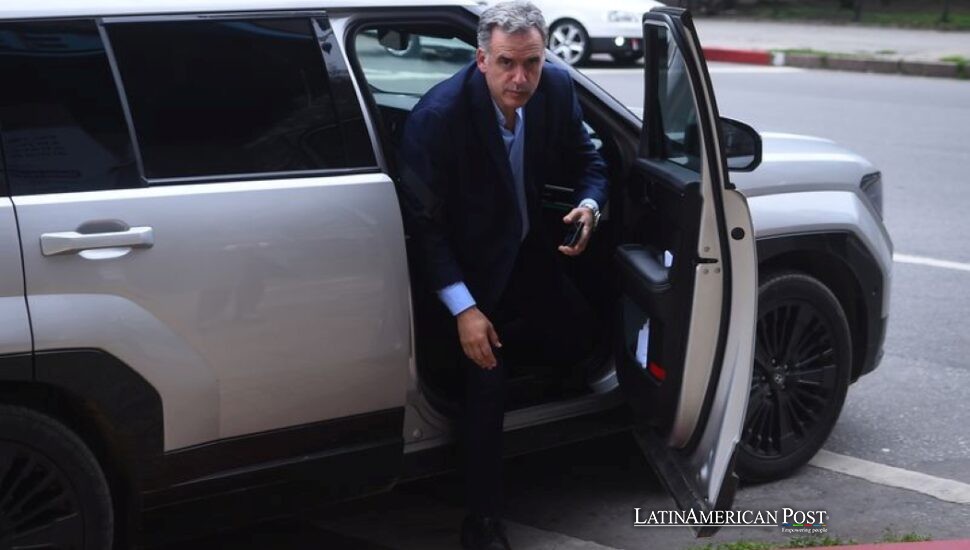
A CIFRA poll shows President Yamandú Orsi with 20% approval and 65% disapproval after Uruguay’s truck controversy, exposing a governing crisis in which personal trust, fiscal caution, and Frente Amplio expectations now collide early in his presidency, before budget season begins.
A Presidency Loses Its Smile
In Uruguay, presidents are not supposed to look unreachable. They drink mate, walk through small towns, talk like neighbors, and survive politics by seeming less grand than the office they hold. Yamandú Orsi built his rise on that kind of closeness. Former mayor, Frente Amplio man, teacherly tone, unforced grin. His political capital was never only partisan. It was personal.
That is why the latest CIFRA poll lands with a thud larger than the numbers themselves.
According to CIFRA, whose survey was conducted by telephone among 800 people from June 1 to June 17, Orsi’s approval has fallen to 20%, while disapproval has climbed to 65%. Another 12% neither approve nor disapprove, and 3% offered no opinion. The margin of error is about 3.4 percentage points at a 95% confidence level, enough to soften the edge but not change the picture.
The picture is bleak.
Mariana Pomiés, CIFRA’s director, said on Telemundo that “the president is not in a good moment of evaluation” and that “barely one in five approves of the administration.” The firm stressed that the fall cannot be pinned only on the controversy over the Hyundai Santa Fe used by the president. Still, the timing matters. This was the first CIFRA survey to fully capture the public mood after the truck episode, and the damage appears to have moved from irritation into identity.
Since February, Orsi’s disapproval has risen from 46% to 65%, a 19-point jump. Approval fell from 31% to 20%, an 11-point drop. Intermediate opinions also shrank, from 23% to 15%, when no-opinion responses are included in the June comparison. In political terms, that means the soft middle is hardening against him. People are not merely unsure. They are choosing a side, and most are choosing displeasure.
The Numbers Are Personal Now
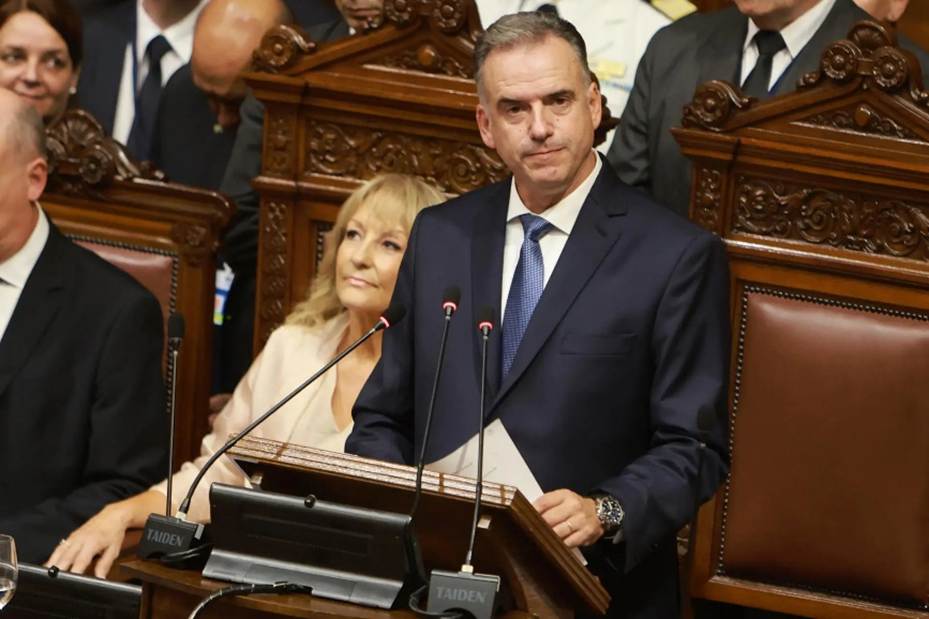
CIFRA’s sharper finding is not just that Uruguayans dislike the government’s performance. It is that many are beginning to dislike Orsi himself.
The poll found sympathy for the president at 34%, while antipathy rose to 52%. In February, the relationship was almost reversed: 51% felt sympathy and 36% antipathy. The intermediate group barely moved, from 13% to 14%. That stability is revealing. Orsi did not mainly cause people to doubt. He lost them to rejection.
Pomiés put it plainly: “His political capital was always his good image, but half do not like him today.”
For a president whose appeal depended on trust, that is dangerous. A technocrat can survive being cold if the economy works. A strongman can survive being disliked if fear or loyalty holds. A neighborhood-style president needs the public to believe he is fundamentally decent, even when his policies disappoint. Once that warmth cools, every explanation sounds defensive.
The party breakdown deepens the warning. CIFRA found that less than half of Frente Amplio voters approve of the president’s management, while a third disapprove. Among coalition voters, disapproval is nearly unanimous. Among the less politicized, those who do not say or do not remember how they voted, nearly three in four disapprove, while only 9% approve.
That last group may matter most. Uruguay is politically organized, but not politically hysterical in the regional style. It has strong parties, high civic habits, and a culture of institutional patience. When the less politicized turn away so decisively, it suggests something has escaped the normal government-opposition frame. The issue is not just right versus left. It is credibility.
Orsi has already admitted concern. In May, after surveys by Equipos Consultores and Factum also showed deterioration, he told reporters that public opinion had to be taken seriously. “If there are people who are not very satisfied, it is because something is not going well,” he said. He called the warning light “orange,” not yellow, and said the government needed to review its actions.
That was before CIFRA’s June snapshot made the warning look redder.
Small Country, Big Consequences
Uruguay’s political drama can look modest from the outside. No mass uprising. No currency panic. No presidential palace under siege. A truck controversy, some bad polls, and a president promising to analyze. But Uruguay’s scale is precisely what makes this crisis so intimate. In a country of roughly 3.5 million, politics travels through family tables, union halls, WhatsApp groups, corner bars and the long memory of who seemed honest before power touched them.
The historical comparison is severe. CIFRA said Orsi’s approval rating is among the lowest recorded since the start of the century, surpassed only by Jorge Batlle during the 2002 crisis and its aftermath. That comparison should be handled carefully. Uruguay today is not living through the banking collapse, contagion from Argentina, and social distress that battered Batlle. But that is also the problem for Orsi. He has reached crisis-level polling without a crisis of the same magnitude.
That points to a crisis of expectation.
The Frente Amplio returned to government with voters expecting social sensitivity, administrative seriousness, and a correction after years of center-right rule. Orsi, more moderate in tone than some of his coalition’s louder factions, seemed positioned to govern as a bridge. Yet early disappointment has gathered around style, communication, and symbols. The Hyundai Santa Fe episode mattered because it touched the oldest Latin American nerve: the suspicion that leaders preach austerity for others and comfort for themselves.
In Uruguay, that suspicion cuts especially deep because the country’s democratic mythology rests on republican simplicity. The ideal president is not supposed to look like a caudillo or a VIP. The car, therefore, became more than a vehicle. It became a stage prop in a story about distance.
Now comes the budget test. Orsi has said Economy and Finance Minister Gabriel Oddone will present guidelines for the Rendición de Cuentas and changes to state social transfers. The president has spoken of simplifying transfers, making them more effective, and increasing some of them. He ruled out tax hikes, saying “there will be no increase,” while expressing philosophical support for a personalized VAT but admitting the country is not ready.
The political bind is obvious. If he tightens spending, his own base may feel betrayed. If he expands social transfers, fiscal critics will accuse him of denial. If he communicates poorly, the content may matter less than the mood. With only 20% approval, even sensible policy can sound like evasion.
CIFRA left one door open. The firm noted that the survey was taken at a particularly sensitive moment and could prove to be the low point from which Orsi recovers if he manages to reverse the effects of the actions and communications that caused the fall. “It is not an easy task,” the report concluded.
No, it is not.
To recover, Orsi needs more than a better explanation of a truck. He needs to restore the compact that made him plausible in the first place: proximity, restraint, and competence. Uruguayans can forgive mistakes. They are less likely to forgive a president who seems not to understand why the mistake hurt.
The country is not only judging a government. It is judging whether the man it thought it knew still looks familiar from the other side of power.
Also Read: Venezuela Quakes Turn Rubble Into a Test of Regional Mercy