Venezuela Quakes Shake Prisons as Political Prisoners Face Aftershock Neglect
After Venezuela’s twin earthquakes, relatives say political prisoners are trapped inside damaged facilities, grieving lost family members and eating worse meals, while a battered nation counts thousands dead and confronts a disaster layered atop years of political and economic collapse.
Aftershocks Behind Bars
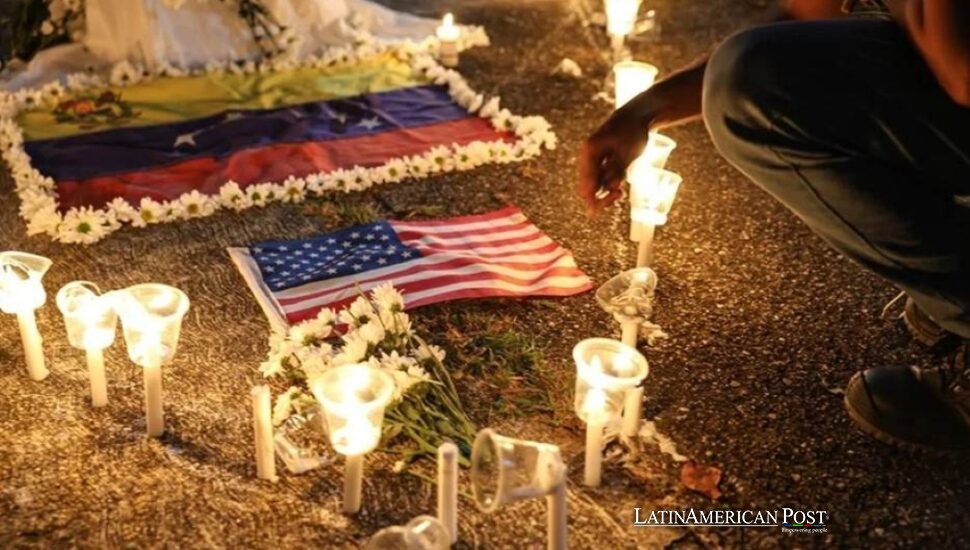
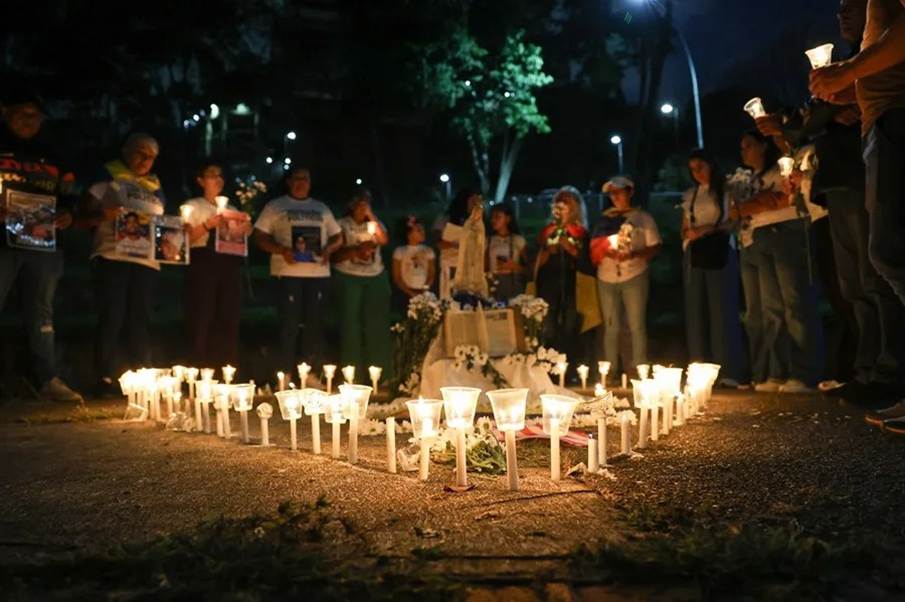
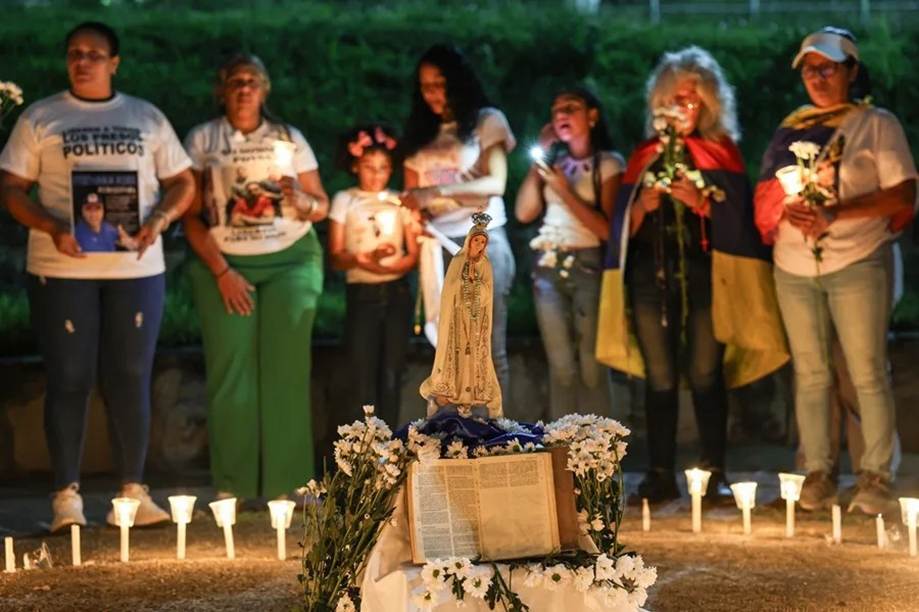
Outside the U.S. Embassy in Caracas, grief had more than one address. Families gathered with candles for the thousands killed in Venezuela’s June 24 twin earthquakes, but some also carried a quieter demand, the kind that rarely gets space in a national emergency: remember the prisoners.
The dead were everywhere in the conversation. So were the missing. So were the men held in military and intelligence-linked facilities, many of them already living under harsh conditions before the earth split walls, collapsed buildings, and turned ordinary visits into exercises in dread.
Relatives of political prisoners told EFE that authorities had effectively abandoned the detainees after the magnitude 7.2 and 7.5 earthquakes struck northern Venezuela. They described worsening food, damaged structures, and little evidence that officials had acted urgently to protect people who cannot run from danger because the state holds the keys.
“They are leaving them abandoned. We know the situation in Venezuela is difficult right now, but it is important that political prisoners are well,” Jessica Castro, a relative of Gustavo Hernández, told EFE. Hernández is linked to the so-called Operation Gedeón, the failed 2020 maritime attack against Nicolás Maduro’s government.
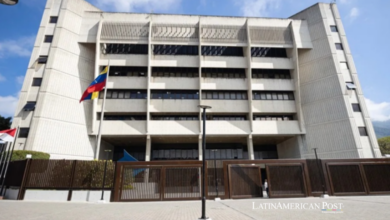
Castro, a member of the Alliance for the Freedom of Political Prisoners, said several walls fell at the Ramo Verde prison in Miranda state and that the structure is badly deteriorated. “The government has not done anything to at least move them to a place where they can be calmer,” she told EFE.
In another country, that might sound like a technical complaint about prison maintenance. In Venezuela, it lands differently. Prisons holding political detainees are not neutral spaces. They are part of a long confrontation between state power, opposition networks, military suspicion, and families who have learned to measure time through visiting days, court delays, and rumors from inside.
Grief Has No Visiting Hours
The earthquakes have pushed Venezuela into a raw national mourning. The official death toll in the notes has climbed to at least 3,685, with earlier figures also citing more than 3,535 dead and 16,740 injured. The shift itself tells a story: in disasters of this scale, the numbers do not arrive complete. They crawl upward as rubble is searched, hospitals report, families identify bodies, and hope narrows into paperwork.
Twelve days after the quakes, rescue operations had already moved from finding survivors to recovering bodies. Vigils spread through Caracas and Maracaibo. At the Central University of Caracas, mourners placed white candles on the ground in the shape of Venezuela, a map made of light in a country accustomed to blackouts, shortages and waiting.
For detainees, even mourning depends on permission.
Mayra Morales, sister of political prisoner Ricardo Fonseca, told EFE that a recent Saturday visit to Fuerte Guaicaipuro was devastating because several detainees had lost relatives in the disaster. “It was a silent visit, and they are truly very worried, and psychologically they are unwell,” she said.
Morales said political prisoners spent days consumed by fear after the earthquakes. One detainee, she noted, received a precautionary measure that allowed him to say goodbye to his wife, who died after the disaster. But the exception sharpened the injustice for others. Why one man and not the rest? Why should grief be rationed by political status?
Her appeal to the U.S. government to mediate with Delcy Rodríguez’s administration for the release of detainees reflects the way Venezuelan suffering is often forced into international channels. Families look abroad because domestic institutions feel closed, captured, or exhausted. That is not just a diplomatic detail. It is part of the political wound.
The earthquakes did not create Venezuela’s prison crisis, humanitarian strain or institutional distrust. They exposed how little margin remained. Before the disaster, nearly 8 million people already needed humanitarian assistance after years of strained public services, poverty, shortages, and migration. Then came the shaking.
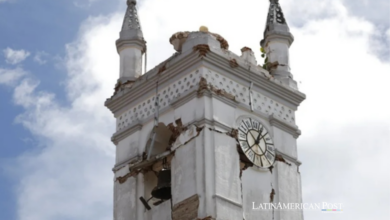
Authorities have reported more than 850 damaged or collapsed buildings, while satellite data cited in the notes suggests the destruction could be far wider, at close to 59,000 buildings, including hospitals and schools. The gap between those figures is not a minor statistical dispute. It is the difference between a difficult recovery and a national reconstruction crisis.
A Country Already Cracked
In La Guaira, more than 17,000 people were left homeless. The government began rebuilding work in Brisas de Maiquetía, where residents were told apartments could be ready in about three months or sooner. Promises like that matter. So does the country in which they are made. Venezuelans have lived through years in which public commitments often collide with scarcity, bureaucracy, and political theater.
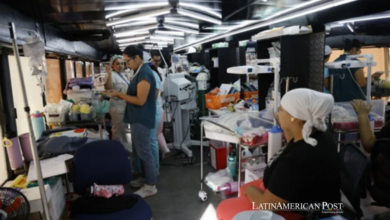
The health system is also absorbing shock on top of fragility. Clínica Alfa, described in the notes as the only private clinic still operating in La Guaira, lost six doctors and five staff members in the earthquakes. It has been treating patients with donated supplies and medicine. That detail should stop the reader. A clinic caring for earthquake victims is also mourning its own dead.
Meanwhile, Venezuelans abroad are trying to move concrete through screens. Cousins in Spain and Orlando have used social media to search for Pedro Veloz Medina and Alejandrina Ramírez de Veloz, their grandparents, who lived in a collapsed seven-story building in Caraballeda. Their family says a crane is needed to lift massive concrete slabs. Without it, Pedro Veloz said, moving the debris properly would be impossible.
This is what collapse looks like in a transnational country. The body is in Caraballeda. The plea is posted from Spain. The interview comes from Florida. The missing belong to a Venezuela scattered by politics and economics long before the ground broke.
For political prisoners, the same fractured nation closes inward. Their families stand outside embassies, prisons, and official silence, trying to make the case that a disaster response cannot be humanitarian only for the visible, the free, or the politically convenient.
The twin earthquakes have made Venezuela’s crisis brutally physical: cracked walls, crushed homes, ruined hospitals, bodies under concrete. But the aftershock inside prisons is moral. A state that declares national mourning must decide whether that mourning reaches locked cells.
At the vigil, the candles were for the dead. The families were also asking for a living.
Also Read: Guatemala Still Searches for Cristina as Femicide’s Silence Grows Louder