Colombia’s Israel Reset Looks Rushed as Washington Starts Squinting Harder
Colombia’s president-elect is moving fast to restore ties with Israel. Still, Washington’s own hesitation over Netanyahu’s wars suggests Bogotá may be chasing yesterday’s alliance map while Latin America’s voters, markets, and moral weather are already shifting.
A Phone Call With a Long Shadow
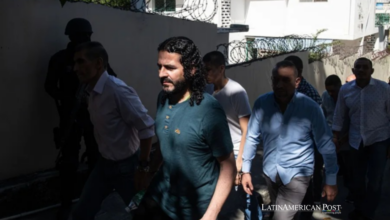
The call was polite, ceremonial, and heavy with history. Colombia’s president-elect, Abelardo de la Espriella, spoke Thursday with Israeli President Isaac Herzog, accepted congratulations, and agreed to advance the restoration of diplomatic relations broken by Gustavo Petro in May 2024 over Israel’s war in Gaza. The statement from De la Espriella’s office spoke the language of capitals and communiqués: respect, trust, security, cooperation, freedom. It sounded like a door reopening. It also sounded, frankly, rushed.
That haste matters because this is not a simple return to normal. Colombia is not merely dusting off an old embassy plaque. It is choosing where to stand at a moment when even the United States, Israel’s indispensable patron, is showing flashes of fatigue, irritation, and strategic divergence. The old assumption that closeness to Israel automatically means closeness to Washington no longer holds as firmly as it once did. That is the fault line under De la Espriella’s gambit.
His instinct is not difficult to understand. Colombian conservatives have long seen Israel as a model of security doctrine, intelligence capacity, agricultural technology, and military discipline. In a country shaped by guerrilla war, cartel violence, kidnapping, and border insecurity, Israel has often appeared less like a distant Middle Eastern state than a manual for survival. For many on the Colombian right, Petro’s rupture with Israel was not diplomacy but ideological theater, a gesture that sacrificed practical alliances to moral denunciation.
Yet the world has moved since May 2024. Gaza has changed the vocabulary of politics across continents. Lebanon and Iran have widened the conflict map. And in Washington, the generational compact that once made Israel nearly untouchable in both parties is fraying in public.

The Old Alliance No Longer Speaks With One Voice
The most striking development is not that Colombia’s president-elect wants to repair relations with Israel. It seems he is eager to do so, as if the old U.S.-Israel alignment were still seamless. The notes tell a different story. In 2026, U.S. diplomacy toward Iran resulted in ceasefire talks and a memorandum of understanding, with Israel not a direct participant. Israel wanted to keep degrading Iran’s missile arsenal and nuclear infrastructure. President Donald Trump wanted calm, energy stability, and the Strait of Hormuz open. Those are not small differences. There are different maps of the crisis.
Vice President J.D. Vance put the point bluntly: the United States and Israel share many interests, but not all. That sentence should ring loudly in Bogotá. For decades, Latin American governments often treated Washington’s closest Middle East ally as an extension of U.S. strategic consensus. But if Washington itself is distinguishing its priorities from Israel’s, Colombia should be cautious before making a dramatic, almost devotional restoration the centerpiece of its foreign policy.
The problem is not restoring relations. States talk to states. Colombia should have channels with Israel, as it should with Arab governments, European partners, and regional neighbors. The problem is promising to strengthen ties “as never before” while the region around Israel is burning and while the United States is struggling to restrain, not simply encourage, Benjamin Netanyahu’s government.
That is where De la Espriella’s promise to consider moving Colombia’s embassy to Jerusalem becomes more than symbolism. It would align Colombia with one of the most contested choices in recent diplomatic history. It would please pro-Israel constituencies and perhaps certain Republican circles in Washington. But it would also risk alienating Arab partners, Muslim-majority states, parts of Europe, and a growing share of younger voters across the Americas who see Gaza not through Cold War categories but through images of rubble, hunger, displacement, and occupation.
Colombia knows something about wounded memory. It knows what it means when the language of security overwhelms civilians’ language. It knows how quickly a state can begin by promising order and end by producing grief. That experience should make Bogotá more careful, not less.
The Lebanon file is especially instructive. Israeli operations in early 2026 reportedly displaced enormous numbers of people and aimed to create deeper buffer zones against Hezbollah. The logic is familiar in Latin America: secure the frontier, pressure armed groups, strengthen the state, and dismantle parallel power structures. But the region’s own history warns that militarized pressure can produce resentment when civilians pay the price. From Central America’s counterinsurgencies to Colombia’s own internal conflict, the lesson is hard-earned. Tactical victories do not automatically become political peace.
Latin America Is Not a Side Stage
There is another miscalculation in a rushed reset: Latin America is no longer a passive theater where foreign alignments can be imported without domestic cost. Petro broke ties with Israel because Gaza had become morally and politically unavoidable for his coalition. De la Espriella wants to reverse that rupture because his voters want a different Colombia, one that feels anchored to the West, suspicious of revolutionary rhetoric, and unapologetic about security partnerships. Both instincts are real. Neither cancels the other.
That is why the smartest Colombian policy would be neither Petro’s maximalist rupture nor De la Espriella’s breathless embrace. It would be a colder, more disciplined diplomacy: restore ambassadors, reopen cooperation, insist on humanitarian law, preserve relations with Arab states, and avoid theatrical embassy moves that buy applause today and complications tomorrow.
Colombia has economic reasons for prudence. Its exporters need diversified markets. Its energy transition requires investment. Its migrant pressures, security needs, and fiscal constraints demand a foreign policy that adds options rather than narrows them. A country still wrestling with inequality, rural violence, illegal mining, coca economies, and institutional distrust cannot afford to turn Middle East diplomacy into a culture-war trophy.
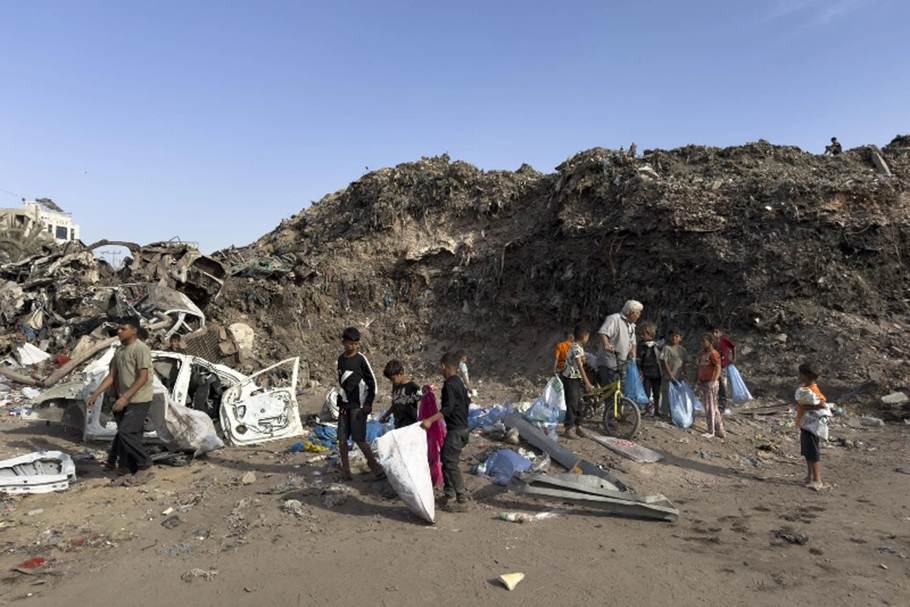
The Gaza question deepens the risk. The notes describe a ceasefire, a U.S.-backed transition plan, a proposed technocratic Palestinian administration, unresolved Hamas disarmament, Israeli territorial control over large parts of Gaza, and reconstruction needs estimated in the tens of billions. That is not a settled conflict. It is a suspended disaster. Colombia should not pretend that restoring relations with Israel is simply returning to an old friendship. It is entering a live argument about occupation, sovereignty, humanitarian law, and the limits of military force.
Then there is the generational shift in the United States. Younger Democrats are far more critical of Israel than their elders. Even among younger Republicans, skepticism has grown. The old bipartisan shield around Israel is still powerful, but it is no longer culturally effortless. For a Colombian president-elect hoping to read Washington well, this matters. The U.S. relationship with Israel is not collapsing, but it is changing from creed into debate.
In that sense, De la Espriella’s move may be strategically understandable and politically satisfying, yet still badly timed. He is betting on the durability of an old alignment just as its foundations are being renegotiated. He is presenting loyalty as clarity when the moment calls for leverage, distance, and a little diplomatic humility.
Colombia should have relations with Israel. But it should not confuse relations with surrendering judgment. A serious country can condemn Hamas, recognize Israel’s security concerns, defend Palestinian civilian life, reject collective punishment, and refuse to let embassy geography become a substitute for strategy. That is not a weakness. That is statecraft.
The danger for De la Espriella is that he enters office sounding less like a president designing a foreign policy than a campaigner rewarding an applause line. Colombia deserves better than reflexive alignment. It deserves a diplomacy equal to its history: scarred, pragmatic, morally alert, and unwilling to mistake yesterday’s certainties for tomorrow’s map.
Also Read: La Guaira Listens for Life as Venezuela’s Quake Grief Deepens