Venezuela Earthquake Diplomacy Turns Rubble Into a Rare Political Bridge
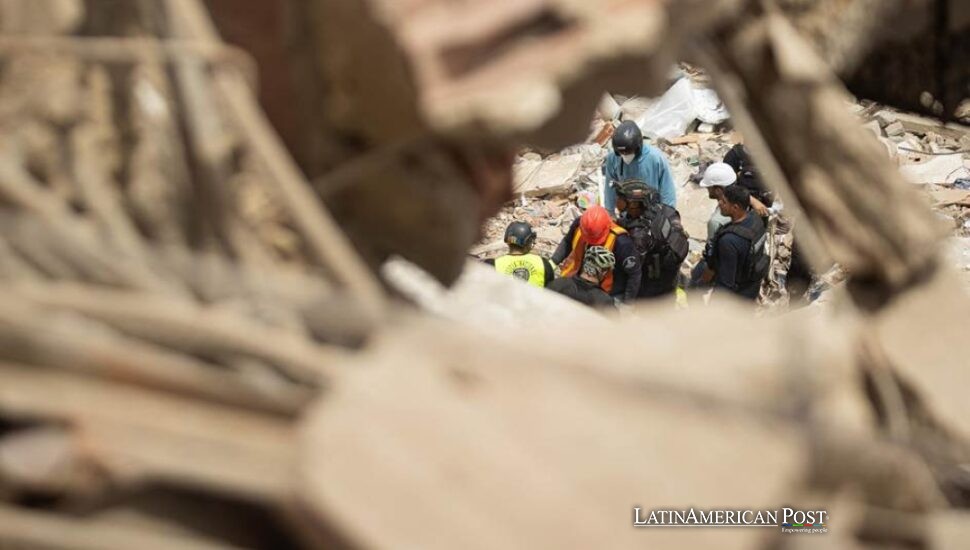
After twin earthquakes shattered northern Venezuela, rescue crews and aid flights have crossed borders that politics had sealed shut, testing whether disaster diplomacy can reopen Caracas to the hemisphere or merely pause old fights while families sleep outside.
When the Ground Moved, Politics Blinked
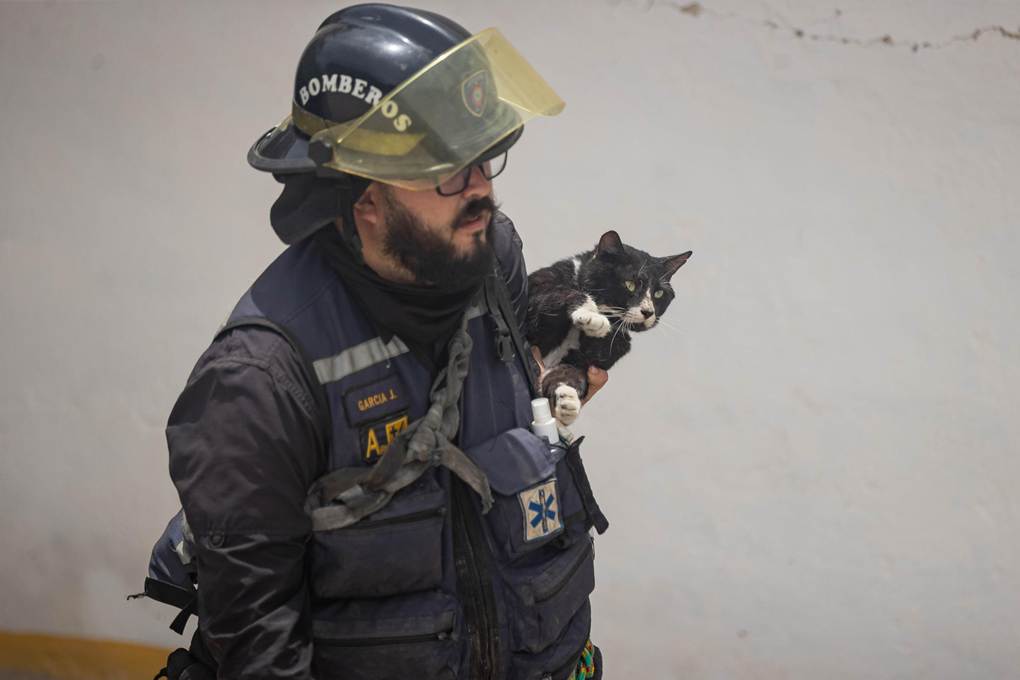
In Catia La Mar, the kind of place where Venezuela’s coast presses hard against mountain and memory, a firefighter lifted a cat from the wreckage as if rescuing a piece of ordinary life. Around him, buildings had cracked open, families were sleeping in plazas, and the dead were still being counted. It was one small animal in one ruined zone. Still, it captured the national mood after two earthquakes, magnitudes 7.2 and 7.5, hit northern Venezuela last Wednesday.
The numbers have already outgrown the first shock. Jorge Rodríguez, president of Venezuela’s Parliament, said Monday that at least 1,719 people had died and 5,034 were injured. Some 15,866 families were listed as displaced or otherwise devastated. The International Organization for Migration, through spokesperson Zoe Brennan, warned Friday that as many as 6.76 million people could have been affected.
Those figures, reported by EFE, are not just disaster statistics. They are a map of structural exhaustion. Venezuela entered this emergency with weakened public services, brittle institutions, mass migration, years of sanctions, and a state whose capacity had already been tested by economic collapse. An earthquake does not choose politics, but it always exposes them.
Now the earth has done something diplomacy could not. It forced conversations.
Governments that only months ago were trading accusations with Caracas have sent rescuers, pledged field hospitals, opened consular channels, and spoken directly with Delcy Rodríguez, Venezuela’s acting president. The United States, Chile, Argentina, El Salvador, Israel, and Canada were among the first to announce humanitarian assistance or contact with Caracas. Spain, Mexico, the Netherlands, Bolivia, Ecuador, and the European Commission have also moved aid or promised more.
This is not reconciliation. Not yet. It is a truce with dust on its shoes.
The New Language of Rescue
The diplomatic turn is striking because it follows one of the hemisphere’s sharpest recent ruptures. After Venezuela’s disputed July 28, 2024, presidential election, governments including Argentina, Chile, Costa Rica, Panama, Peru, the Dominican Republic and Uruguay questioned the official results that gave Nicolás Maduro victory. Chavismo answered by withdrawing diplomatic staff from several countries and demanding that foreign representatives leave Caracas.
Relations with Argentina and Chile became particularly damaged. Javier Milei’s government refused to recognize Maduro’s victory, while Chile’s Gabriel Boric openly challenged the results. With Washington, the confrontation ran even deeper, through sanctions, commercial restrictions, and a Caribbean military and naval posture aimed at narcotrafficking networks linked by U.S. authorities to Maduro, who faced narcoterrorism charges in New York.
Then came a political earthquake before the geological one. The notes describe Maduro’s capture in January by U.S. troops on Venezuelan territory, followed by Donald Trump’s recognition of Delcy Rodríguez as acting president, the restoration of diplomatic relations and Washington’s growing influence over reforms led by Rodríguez. In that account, the United States has become the new government’s main international support and the actor best positioned to help Caracas return to diplomatic circulation.
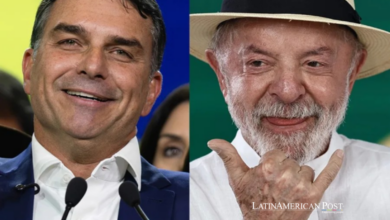
The earthquakes have strengthened that opening. Washington has maintained direct contact with Rodríguez to coordinate rescue operations. Chilean President José Antonio Kast spoke with her by telephone, expressed solidarity, and announced aid. Máximo Pavez, Chile’s interior undersecretary, told EFE that the tragedy could become an “opportunity” to improve relations with Venezuela “in a respectful way.” He went further, saying that this unexpected “humanitarian diplomacy” could allow more fluid and faster progress toward stable diplomacy between Chile and Venezuela.
Argentina announced a humanitarian consular mission to assist its citizens affected by the earthquakes, nearly two years after Argentine diplomatic personnel were expelled from Caracas. Buenos Aires had already sent rescue brigades and planned a second team.
Even El Salvador, whose relationship with Caracas had been poisoned by the transfer of more than 100 Venezuelans deported by Washington to Bukele’s maximum-security Cecot prison, offered immediate support. President Nayib Bukele spoke directly with Rodríguez, despite having previously described Venezuela’s government as tyrannical.
Latin America knows this script. Disaster can briefly suspend ideology because bodies under concrete make speeches look obscene. But the region also knows the limits of compassion as policy. Earthquakes in Haiti, hurricanes in Central America, mudslides in Venezuela itself, especially the 1999 Vargas tragedy along the same coast, have shown that aid can arrive faster than reconstruction, and photo opportunities can outlive accountability.
A Country Damaged Before the Quake
Caracas says 3,319 foreign rescuers have entered the country, with 140 dogs and 49 support vehicles. Rodríguez said teams from El Salvador, Mexico, the Dominican Republic, Switzerland, Ecuador, Spain, Chile, Colombia, the Netherlands, Italy, and the United States arrived this week, with more expected. More than 7,800 Venezuelan volunteers have registered at a center in Caracas, according to official figures.
That civic response matters. In Venezuela, the citizen has often been the emergency institution of last resort. Families have survived blackouts, shortages, migration separations, and political fracture by building informal networks of transport, food, remittances, and medicine. Now that same social muscle is moving water, supplies, and bodies.
But goodwill is not logistics. A World Food Program official in Venezuela told EFE that “logistical chaos” was unfolding because so many people were spontaneously trying to help. The official called for an organization that respects people’s dignity and ensures adequate distribution. That warning should not be read as bureaucratic fussiness. In a country where trust in institutions is fragile, disorganized aid can become another wound. People remember who received water, who did not, and who controlled the line.
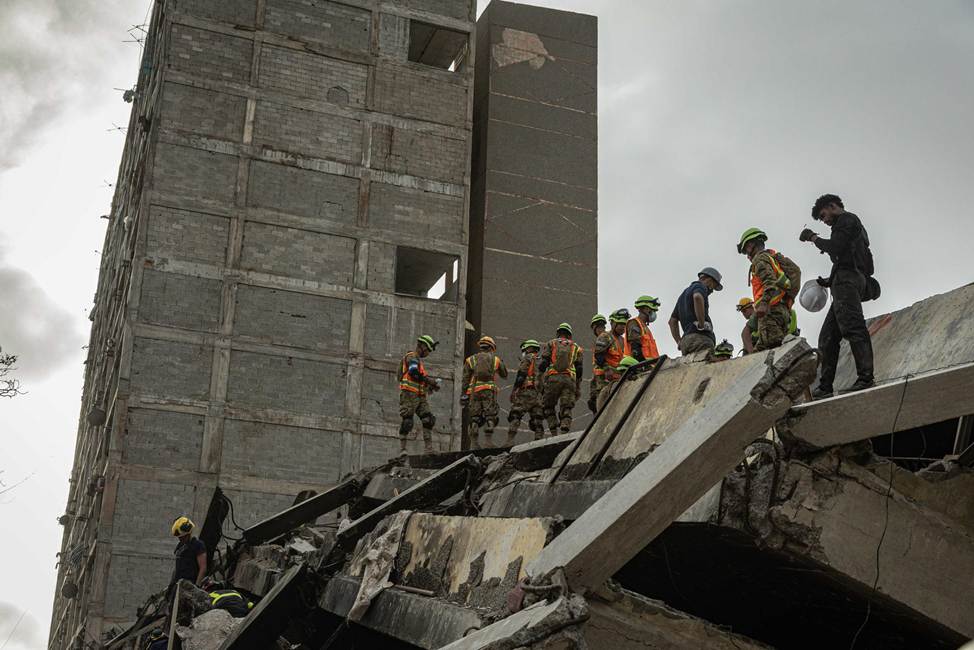
The damage is staggering. A preliminary satellite assessment using the UN Development Programme’s RAPIDA analysis estimated losses in housing and economic assets, including vehicles, buildings and businesses, at $6.7 billion. Venezuelan authorities said 855 buildings were affected, with 189 suffering total collapse. Other estimates cited in the notes suggest the earthquakes may have affected roughly 59,000 buildings.
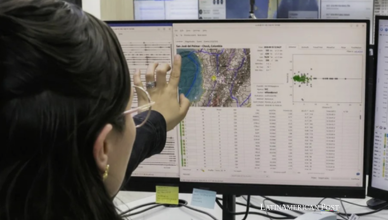
The Venezuelan Foundation for Seismological Research reported more than 600 aftershocks since Wednesday’s quakes, including a Monday morning tremor that Venezuela measured at 4.2 and the U.S. Geological Survey put at 4.6. For families inside damaged buildings, the decimal is academic. Fear has moved them outdoors.
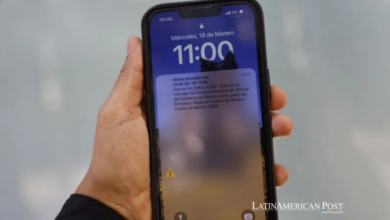
UNHCR, coordinating protection and shelter for the displaced, said Tuesday that conditions in affected areas had “deteriorated rapidly,” according to EFE. The agency warned of severe food shortages, collapsed basic services and rising protection risks for displaced people. Early assessments in La Guaira, the Capital District, Miranda, Aragua, and Carabobo found that roughly half of those surveyed were staying with relatives or neighbors, while 39 percent remained in streets and public spaces. Others were in churches, schools, or makeshift facilities that did not meet minimum standards for protection, privacy, or hygiene.
The most painful figure may be smaller: 17 percent of respondents reported unaccompanied or separated children. That is where disaster stops being a national drama and becomes one child unable to find a parent in the noise.
Spain has promised a plane carrying a field hospital. Mexico is preparing more aid. The Dutch government sent a ship from Curaçao with emergency food and drinking water. The European Commission announced five million euros in aid and an aircraft carrying 50 tons of shelter and medical supplies. Bolivia readied a Hercules aircraft with 20 rescuers and six tons of aid, while Ecuador said it hoped to send one aid plane per day this week.
For Venezuela, reconstruction will require more than cement. It will require credibility, transparency, and coordination across a society trained by crisis to doubt official narratives. When EFE asked UNHCR spokesperson Carlotta Wolf about social media reports alleging a lack of transparency in aid delivery, she answered carefully that in emergencies like this, UN agencies usually support the government-led response, and that this was also happening in Venezuela.
That is the diplomatic bargain now buried in the rubble. Foreign governments need Caracas to distribute help. Caracas needs foreign governments to rebuild. Venezuelans need both sides to behave better than history suggests they might.
The earthquake has given Venezuela a rare opening. Not because tragedy ennobles politics. It often does not. But because every rescue dog, every consular mission, every field hospital, and every donated water container has created contact where there was rupture. The question is whether leaders can turn that contact into a durable bridge, or whether the old quarrels will return once the cameras leave and the displaced are still sleeping outside.
Also Read: Venezuela Quakes Expose the Fault Lines Beneath Latin America’s Resilience