Mexico World Cup Glamour Meets Families Digging for Their Missing
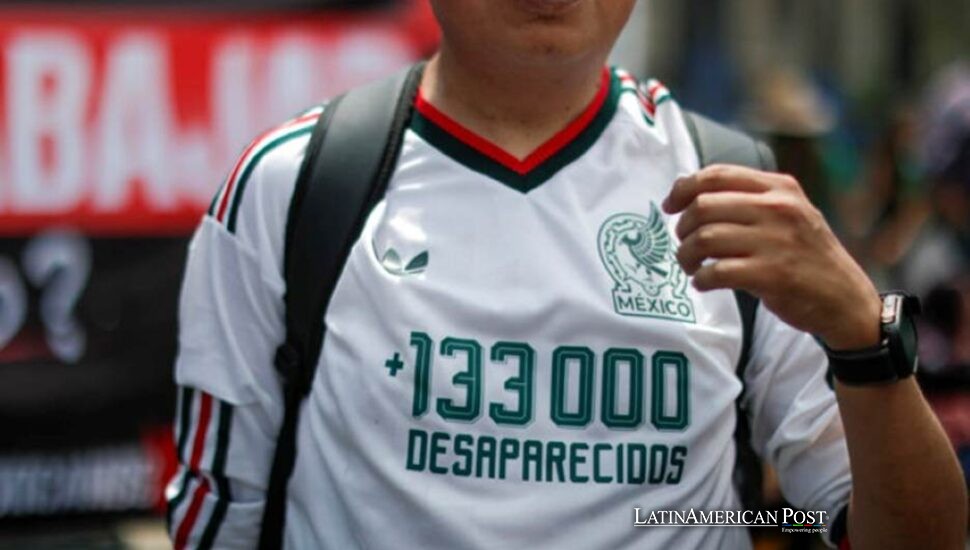
As Mexico showcases Guadalajara at the World Cup, mothers searching for the disappeared expose a darker national scoreboard: graves near stadium roads, broken forensic systems, and a country forced to cheer while families still dig for justice.
The Stadium Road Runs Past the Missing
The small yellow frog is the kind of toy that should belong to a child’s bath or a classroom shelf, not a dirt lot where mothers are testing the earth for death. It lies in the dust as a metal pole enters the ground. The women push, pull it out carefully, and bring the tip toward their faces.
“This is how you search for bodies,” the mothers say, in reporting and interviews originally published by The Athletic’s Jacob Whitehead. “We search with our noses. Like wild dogs.”
In western Mexico, this is not metaphor. It is method. Soft earth can mean recent digging. Concrete beneath a thin layer of dirt can signal concealment. The smell on a probe can tell these women whether they are near an animal, a human being, or another false alarm in a country where grief has learned to do fieldwork.
They are the Guerreros Buscadores de Jalisco, the Jalisco Search Warriors, a collective of families looking for some of the more than 130,000 people officially recorded as disappeared in Mexico. Experts and families believe the true number is higher. In Jalisco alone, the state registry counts more than 16,000 missing people, the largest total of any Mexican state. Since the beginning of last year, the group says it has found at least 350 bags of remains in wasteland, homes, construction sites and the edges of Guadalajara’s urban sprawl.
The number is chilling not only for its scale but for its geography. The searchers say at least 22 shallow graves have been found near Estadio Akron, the stadium in Zapopan that will host World Cup matches. Another 270 bags of remains were discovered in Las Agujas, about eight miles north. In a different country, proximity to a stadium might mean commerce, traffic, pride. Here, it means a map where the global festival of soccer overlaps with the local economy of disappearance.
That contradiction is what families are trying to force into view. Guadalajara has been polished for visitors, given public art, renovations and the sheen of a host city. But the mothers say the beauty campaign has landed like an insult. Victoria, one of the searchers, told Whitehead that the World Cup makes their pain worse. “The ball comes back,” she said, “but when are our children going to return?”
A Cartel Capital With a Tourist Smile
Guadalajara is often sold as a cultural capital: mariachi, tequila routes, Chivas, old plazas, tech investment, colonial facades and a modern skyline. But Jalisco is also the home base of the Jalisco New Generation Cartel, whose rise has reshaped the violence of the last decade. The cartel did not merely bring more killings. It industrialized fear, made disappearance a governing language, and turned ordinary neighborhoods into archives of the unburied.
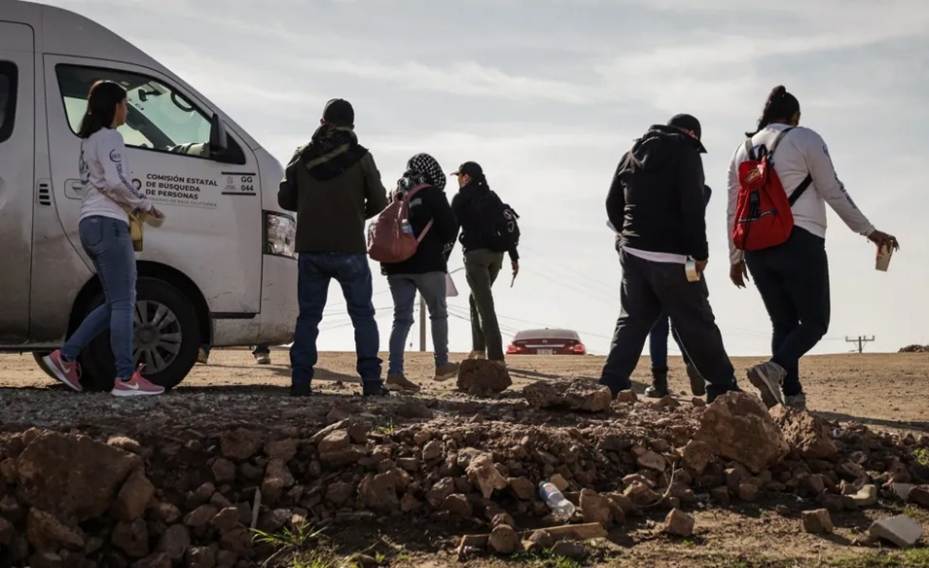
That is why the mothers search in places that look painfully normal. A social housing development. A backyard. A cow field near a playground. A street where children shout when the truck arrives. The macabre lives beside the domestic. A father asks the searchers to move their vehicle because his daughter is turning 10 and the family wants to set up a bouncy castle. The women move forward. They need neighbors to trust them. Anonymous tips are their lifeline.
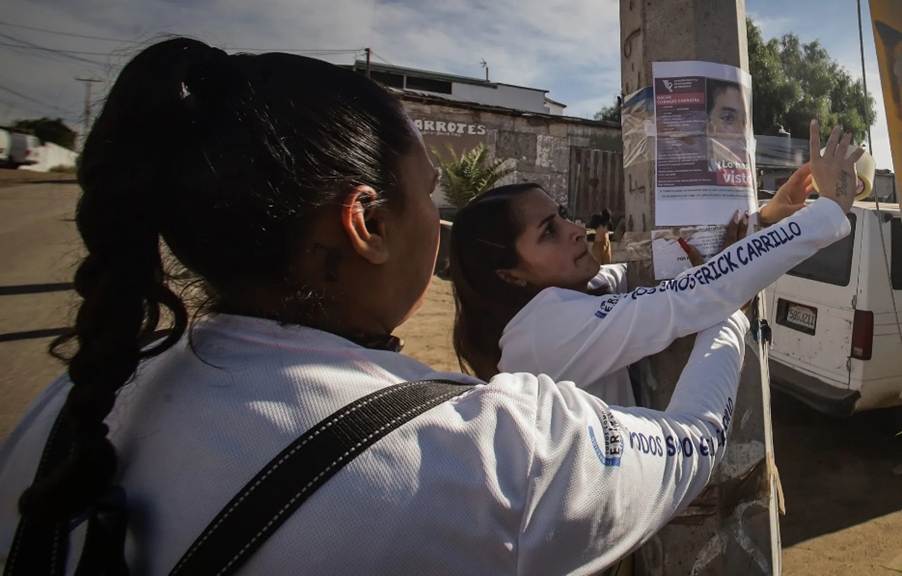
This is one of the cruelest features of Mexico’s disappearance crisis: the state’s absence has forced families to become investigators, forensic assistants, negotiators, field crews and mourners all at once. The searchers cover license plates to avoid being tracked. Some hide their faces. They travel in convoy because arriving together and leaving together is a rule of survival. The group says eight members have been killed or disappeared in recent years.
Susana, whose brother Erick vanished after going to work as a waiter at a party, describes fear as something that has not disappeared but changed shape. At first she wore a hat, sunglasses and a face covering. She worried about who might want to hurt her. Then the fear became part of the uniform. “When I put on my boots, I feel like they give me superpowers,” she told Whitehead. “With my boots on, I can do anything.”
That sentence carries the moral inversion of the crisis. In a functioning democracy, boots like hers would belong to trained personnel working under due process, with evidence protocols and protection. In Mexico’s graveyards without gates, they belong to sisters, mothers, wives and daughters doing what institutions have failed to do. The state promises searches, databases, commissions and “unprecedented steps,” but families still lack forensic scientists, investigators, tools and timely identification. A body can be found and still remain socially missing if the lab never names it.
The searchers understand the politics of spectacle. Mexico knows how to receive the world. Latin America has long hosted global celebrations amid inequality and state violence, turning stadiums into theaters where national myths perform for foreign cameras. The World Cup offers jobs, hotel nights, infrastructure and a chance to soften headlines. But in Jalisco, the party sits over a wound that refuses makeup.
The Ball Returns, the Children Do Not
At the Glorieta de los Niños Héroes in central Guadalajara, the posters of the disappeared cover public space so completely that the roundabout has been renamed by common use: the Roundabout of the Disappeared. Faces spill over one another. They do not fray because someone is always replacing them. Memory here is maintenance.
On match days, families protest. One Mexico jersey is painted red like blood. A slogan says Mexicans are not invited to the World Cup. The line is bitter because it does not reject soccer itself. It rejects the hierarchy of attention. Beatriz, who traveled from Veracruz wearing a jersey with the face of her missing son, put it plainly: mothers are not against sports. They are against millions of pesos spent on celebration while families search with ghosts for tools.
There are no easy lines between joy and betrayal. Alejandro, whose son Hector loved Chivas and watched games at Estadio Akron, supports the World Cup. He just cannot bear that Hector is not there to see it. Every four years, father and son watched together. Now his sign carries a small Chivas shirt drawn in marker and a sentence that rearranges fandom into grief: “Your passion is football. Our passion is finding you.”
That is the deeper story in Whitehead’s reporting. The families are not asking Mexico to stop loving soccer. They are asking Mexico to stop using soccer to look away. Their grief is not anti-national. It is a demand that the nation become worthy of its symbols.
In Villa Fontana, the searches move from suspicion to disappointment and back again. The women test soil and rule out bad tips. They laugh at mice, cockroaches and the absurdity that keeps them from breaking. They remember sites where bags of human remains were found near children’s spaces. They hear insults from neighbors and watch distant figures who may be reporting to someone more dangerous. They dig when the earth softens. They stop when the ground hardens. They pray when they find someone.
The yellow frog appears near the final hole, where concrete seems to promise an answer. Susana strikes it again and again until it breaks. The women dig down nearly half a meter. Then nothing. Hard soil. Debris. No body. No certainty. The absence hurts because even a grave can be a kind of mercy when the alternative is endless imagining.
Gloria, another searcher, described the condition with devastating precision. “I’m dead while I’m alive,” she said. Yet she wakes and asks for strength. A child was taken from her. A mother, she said, does not stop.
That is Mexico’s other World Cup image, whether FIFA cameras show it or not: women in black shirts, boots dusty, poles in hand, working the land for truth while the stadium lights rise nearby. The country can host the world. The question is whether it can face the ground beneath its feet.
Editor’s Note: This article was adapted from the original report, “Special report: Searching for Mexico’s disappeared in the shadow of the World Cup,” by Jacob Whitehead, originally published by The Athletic.
https://www.nytimes.com/athletic/7391151/2026/06/26/mexico-disappeared-world-cup/
Also Read: Uruguay Poll Crash Puts Orsi’s Truck Scandal in the Driver’s Seat