Latin America Learns FIFA’s Field Tilts When Trump Calls Infantino
A suspended World Cup ban, a presidential phone call and FIFA’s sudden flexibility reveal a troubling lesson for Latin America: soccer’s rulebook bends fastest for power, while smaller nations are told to respect procedure and swallow injustice.
A Red Card, a Phone Call, a Reprieve
The ball was barely cold from the United States’ 2-0 win over Bosnia and Herzegovina when the machinery began to move. Not the ordinary machinery of soccer, the slow grind of disciplinary forms, match reports, and official language. This was something warmer, richer, more human in the worst way. It had names. It had access. It had phones that got answered.
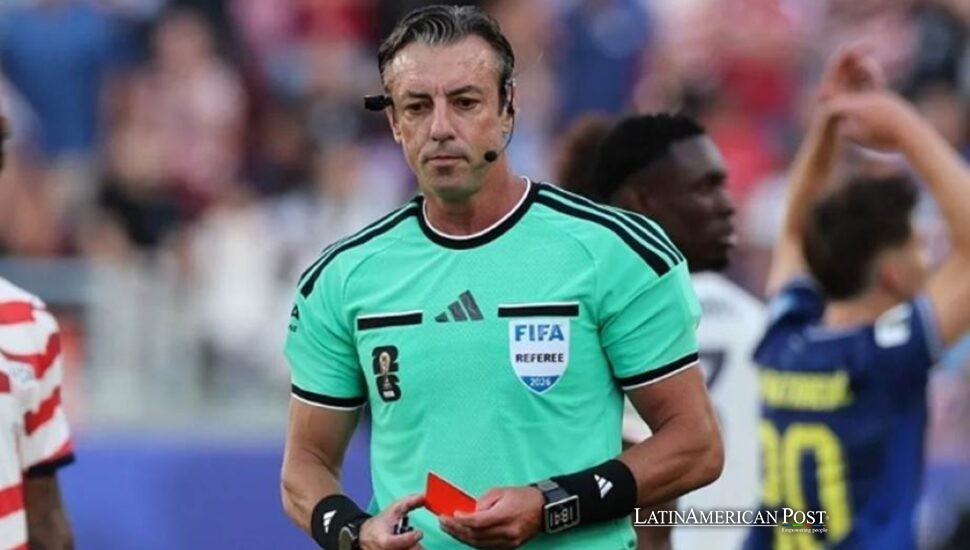
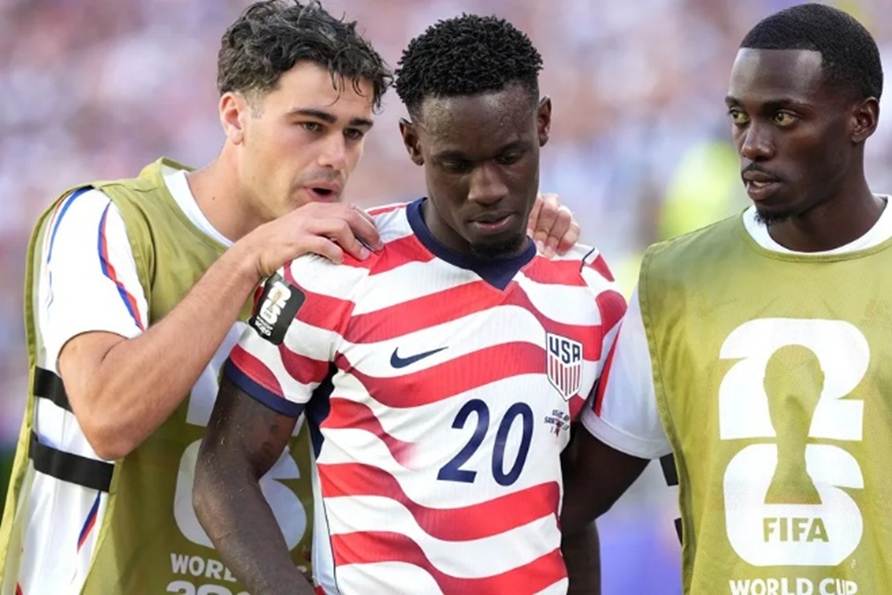
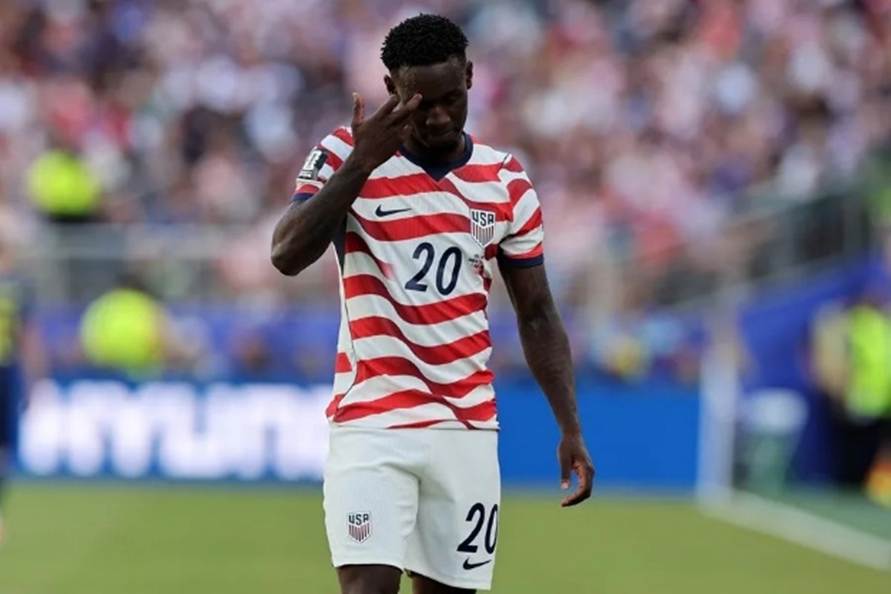
Folarin Balogun had been sent off for fouling Tarik Muharemovic. Under FIFA’s own rulebook, the punishment was supposed to be plain enough for anyone in Buenos Aires, Tegucigalpa, Kingston or La Paz to understand. A red card meant an automatic one-game suspension. No appeal. No dramatic courtroom scene. No friendly loophole waiting backstage.
Then President Donald Trump called FIFA president Gianni Infantino.
What followed was not merely the reprieve of a striker before a round of 16 match against Belgium. It was a public lesson in how power behaves when it wants something badly enough. Lawyers were assembled. U.S. Soccer worked the disciplinary channels. Howard Lutnick, the commerce secretary, hovered near the story. Andrew Giuliani, executive director of the White House Task Force for the World Cup, was reportedly engaged. Marco Rubio called the red card a case of the U.S. team getting “screwed” and demanded an appeal process. Soon enough, FIFA’s independent disciplinary committee found a way to suspend Balogun’s ban, even though FIFA’s rules seemed to offer no formal appeal route for that outcome.
Maybe the red card was harsh. Many red cards are. Latin America knows that better than most. We have watched World Cups swing on elbows missed, penalties imagined, goals disallowed, and star players swallowed by disciplinary codes that suddenly become sacred when the shirt is not backed by a superpower. The issue is not whether Balogun deserved sympathy. The issue is whether sympathy becomes policy only when it arrives by presidential phone call.
That is not a level playing field. That is the powerful discovery of a side door, and calling it justice.
FIFA’s Neutrality Suddenly Looks Optional
FIFA sells neutrality like a priest sells incense. It is in the air at every ceremony. It appears in the statutes, the speeches, and the solemn warnings to federations that governments must not interfere in the sport. Latin American countries have heard that sermon for decades. Any time a ministry leans too hard on a federation, any time a president tries to clean up or capture a soccer body, FIFA appears with its cold institutional voice. Keep government out. Respect the independence of football. Do not politicize the game.
Now, the president of a host nation reportedly calls FIFA’s president about a suspension affecting his national team, and the result is a ruling so surprising that even U.S. players initially wondered whether the news was AI-generated. Belgium was astonished. It had every right to be.
This is the contradiction at the heart of the Balogun affair. FIFA is strict when the offender is poor, divided, or dependent. FIFA is supple when the offender is rich, central, and surrounded by cameras. The United States is not just another federation in this World Cup. It is a co-host, a commercial giant, a broadcast market, a security partner, a diplomatic machine. It is also a country whose president has cultivated an unusually visible relationship with Infantino.
That relationship matters. FIFA opened an office in Trump Tower, which means soccer’s global governing body is paying rent in a building tied to the Trump family. Infantino created the FIFA Peace Prize and awarded it to Trump after the president had openly sought the Nobel Peace Prize. FIFA moved its World Cup draw plans after Trump suggested Washington’s Kennedy Center, a venue newly shaped by his political circle, instead of Las Vegas. At that draw, Infantino presented Trump with a trophy, medal and certificate, then staged the Village People’s “YMCA,” a campaign-rally anthem in Trump’s world.
No one needs a secret recording to see the problem. The appearance is already damaging. FIFA’s credibility depends not only on whether pressure directly changed a decision, but on whether ordinary fans can believe the same route would exist for Ecuador, Honduras, Paraguay, Bolivia, Peru, Costa Rica, Panama or Jamaica.
Can anyone seriously imagine a Latin American president calling Infantino to complain about a one-game ban and receiving this sort of procedural miracle within days? Would a Caribbean federation donor, a commerce minister, a task force official and outside lawyers be seen as normal participants in a disciplinary process if the player were wearing Guatemala’s blue and white? Would FIFA’s tone be patient, or would it become instantly legalistic?
Latin America knows the answer because it has lived inside the hierarchy of world soccer. Our teams are passionate enough to sell, dramatic enough to market, and useful enough to fill stadiums. But when power is distributed, the region is often expected to provide color rather than leverage.
Latin America Knows This Game Too Well
For Latin America, this is not a narrow American scandal. It is a reminder of an old imbalance dressed in modern tournament branding. The World Cup likes to imagine itself as a village, but it often functions like an empire. The rich countries negotiate. The poorer countries comply. The powerful federations litigate. The others accept the decision and call it an honor.
That is why the Balogun reprieve cuts deeply. In Latin America, soccer is not an accessory to national life. It is one of the places where class, race, migration, memory, and hope are forced to sit together in public. A boy in Medellín, a girl in San Pedro Sula, a grandfather in Montevideo, a vendor in Lima, all understand that football is unfair because life is unfair. But the point of the pitch is that, for 90 minutes, the unfairness is narrowed. Not erased. Narrowed.
This episode widens it again.
Think of the cultural insult. Latin American teams are constantly told to master discipline, to control emotion, to stop blaming referees, to accept that football is cruel. When our players rage, they are “undisciplined.” When our coaches protest, they are “volatile.” When our fans suspect favoritism, they are “conspiratorial.” Yet when the United States feels wronged, its government officials, donors, and political allies can enter the frame, and the language shifts. Now it is an injustice. Now it is due process. Now it is a moral correction.
That double standard is not just cosmetic. It affects tournaments. Balogun had three goals and three assists. He was central to the U.S. attack. His availability for the match against Belgium was not a small clerical matter. It shaped preparation, tactics, morale, and competitive balance. Pochettino trained for days as though Balogun would be missing. Belgium prepared under the rule as written, only to learn that the rule had become negotiable. The United States gained not only a player but the psychological boost of seeing the system bend toward it.
Latin American sides have lost key players to suspensions and swallowed the consequences because the book said so. They have played matches under clouds of questionable refereeing and moved on because the tournament demanded it. They have faced wealthy opponents with deeper benches, better travel conditions, better political access, and more institutional fluency. Against that history, FIFA’s sudden creativity is not a footnote. It is evidence.
And evidence matters. FairSquare already filed an ethics complaint over FIFA’s relationship with Trump. Fifty members of the European Parliament asked FIFA to address it. The Norwegian Football Federation supported the complaint. These are not fan grumbles shouted at a television. They are formal alarms about governance, proximity, and political contamination.
The deeper harm is trust. Once supporters believe influence can reopen a closed door, every future decision becomes suspect. Every suspension, every VAR intervention, every unexplained exception will be read through the same lens. Who called? Who paid? Who hosted dinner? Who has an office in whose tower?
FIFA can insist that the committee was independent. It can be said that the VAR presentation relied too heavily on slow motion and freeze frames. It can be argued that suspending the ban was the only regulatory path available. But institutions are judged by patterns, not press releases. Here, the pattern is ugly. A president intervened. Political allies circled. FIFA had already cultivated the president. A punishment that appeared mandatory became movable.
That should trouble every federation in Latin America. Not because the United States is always wrong, and not because Balogun is undeserving of fairness. It should trouble the region because fairness that requires proximity to power is not fairness at all. It is a privilege with a legal memo.
The World Cup belongs to the world, or it does not. FIFA cannot keep lecturing Latin American governments about noninterference while smiling through political theater in Washington and New York. It cannot demand neutrality from the weak and practice intimacy with the strong. It cannot ask fans in the Americas to believe in the sanctity of the game while making the rulebook look like a velvet rope.
Soccer has always had kings. Latin America has produced plenty of them with muddy shoes and impossible first touches. But the sport does not need kings in the disciplinary room. It needs rules that apply to everyone, especially when the phone rings from the most powerful address in the hemisphere.
Also Read: Paraguay Eyes France Upset as World Cup Ghosts Return Saturday