Colombia Bets on De la Espriella as Markets Count Pesos
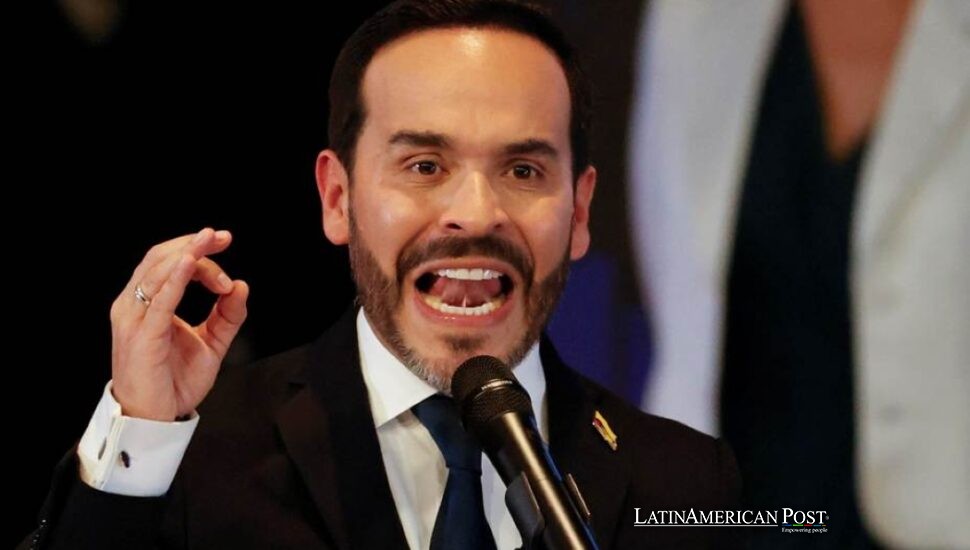
Colombia's incoming far-right president, Abelardo de la Espriella, promises fiscal shock therapy, oil revival and a patriotic miracle. Still, the country he inherits is carrying heavy debt, weakened investment, and a social bill too large to disappear.
A Victory with a Calculator
On the morning after the election, Colombia woke up with markets smiling and many households doing quieter math. The peso, the bond desks, the analysts in glass towers, the oil men waiting for permits- they all read Abelardo de la Espriella's victory as a sharp turn. Not a correction. A rupture.
On August 7, the far-right lawyer and leader of the Defensores de la Patria movement will take office, promising what he has called a "patria milagro," a miracle homeland, and a transformed "blessed Colombia." The language is devotional. The program is harder-edged: drastic fiscal adjustment, a smaller state, renewed oil and gas production, and a full reversal of Gustavo Petro's social-spending model.
The mandate is not just ideological. It is arithmetic. According to Finance Ministry figures cited in the notes, the central government's net debt reached 61.5 percent of GDP in the first quarter of 2025, up from 54.1 percent a year earlier. That is a jump of 7.4 percentage points in 12 months, a worrying climb in a country where investors still remember how quickly confidence can thin.
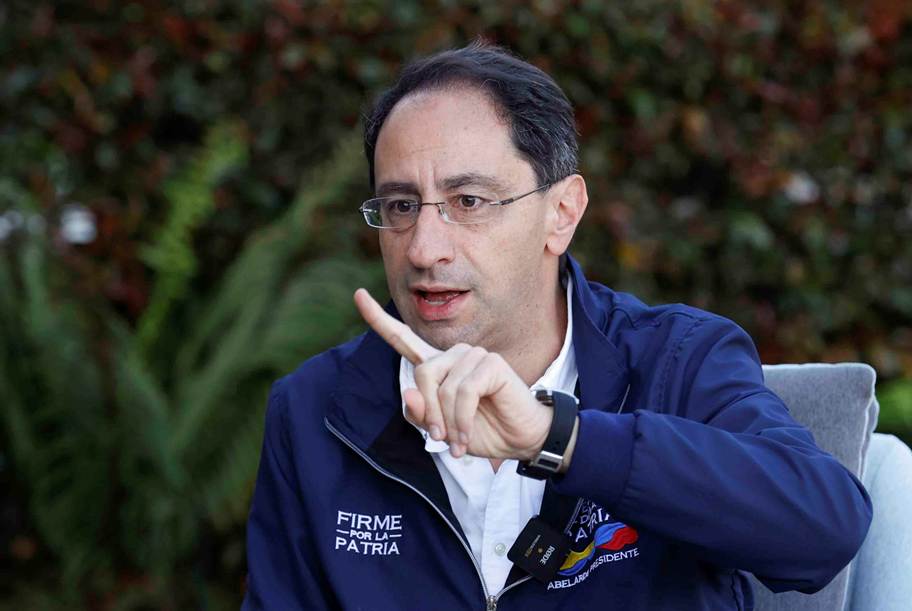
José Manuel Restrepo, the vice president-elect and a former finance minister, told EFE during the campaign that Colombia's primary deficit had grown more than tenfold in just two years, while public debt had risen more than 50 percent in three and a half years. The claim functions politically as an indictment of Petro. Economically, it is a warning label for the next government.
ANIF, the economic research center, has called what De la Espriella will inherit a "fiscal time bomb.” The recommended tax reform would seek 30.2 trillion pesos, about $8.77 billion, to close the 2027 fiscal scenario and return to the fiscal rule. That figure matters because it punctures the easy fantasy of austerity. Cutting is not enough. Colombia may also need to collect more.
That is where politics begins to bite. A president elected on shrinking the state may have to ask Congress for tax reform. A movement built on fury against the old order may have to negotiate with it. In Latin America, the market loves discipline until discipline reaches the price of fuel, medicine, electricity, or payroll.
The Social Bill Comes Due
Jairo Libreros, a professor at Universidad Externado de Colombia, told EFE that De la Espriella will likely focus on "honoring the debts" left by Petro's government with health and energy companies and on rebuilding the health system. Then he added the sentence that may define the next four years: "Social issues are going to fall behind on the list of priorities of Abelardo de la Espriella's administration."
That is not a small administrative shift. It is a change in the moral center of government.
Petro built his presidency around the idea that Colombia's public purse should lean toward social repair: health, pensions, subsidies, rural inclusion, and the long promise that the state might finally arrive in places where armed groups, churches, remittances, and local bosses had long arrived first. De la Espriella represents a counterargument: that the state has spent beyond its means, punished investment, weakened strategic sectors, and replaced growth with redistribution.
The question is not whether Colombia needs fiscal order. It does. A debt ratio above 60 percent of GDP is not catastrophic by rich-world standards. Still, Colombia is not the United States or Germany. It borrows under a different sky, with a currency more exposed to global moods, credit ratings more sensitive to political noise, and a tax base narrowed by informality.
The deeper question is who pays for the order.
If the new government delays payments to social programs, tightens eligibility, cuts bureaucracies and pushes public services toward efficiency, families will feel it first in clinics, energy bills and local employment. In Bogotá, that can sound like a technocratic adjustment. In La Guajira, Chocó, Catatumbo, or the Pacific coast, it can feel like abandonment with better vocabulary.
Colombia's history makes this especially combustible. The country's armed conflict did not grow only from ideology. It grew from land inequality, state absence, regional exclusion and economic models that connected some territories to global markets while leaving others to survive on extraction, coca, informal mining or migration. Austerity in Colombia is never just budget policy. It is territorial policy.
De la Espriella's supporters will answer that there is no social program without money to fund it. They are right. But his critics will answer that there is no stable investment climate in a country that treats poverty as a spreadsheet nuisance. They are right too.
That is the Colombian trap. The next government must restore confidence without teaching millions that confidence is for investors only.
Oil, Gas, and the Old Promise
The clearest applause came from business sectors that spent the Petro years waiting for the energy pendulum to swing back. De la Espriella has promised to resume oil exploration and production, including fracking, and to push natural gas, regasification solutions, and liquefied gas projects along the coasts.
Mauricio Guzmán, investment strategy leader at Sura Investments, said after the vote that markets were recognizing the possibility of a more favorable investment environment, greater fiscal responsibility and stronger growth prospects. He told EFE that the coming years will be defined by Colombia's ability to recover investor confidence.
That confidence has a concrete address: oil, mining, energy regulation, and the belief that rules will not change midstream. Foreign direct investment declined under Petro, especially in the petroleum and mining sectors, which are historically central to exports and public revenue. For a government facing a fiscal gap, hydrocarbons are not just ideology. They are cash flow.
Yet Colombia's return to oil comes with a regional contradiction. Latin America speaks the language of climate vulnerability because it lives it, through floods, droughts, landslides, and crop shocks. But many of its states still finance social peace through extractive rents. Ecuador, Brazil, Mexico, Guyana, Argentina, and Colombia all know the temptation: drill now, diversify later.
The danger for De la Espriella is believing hydrocarbons can buy enough time without deepening old dependencies. Oil revenues can steady accounts. They can also strengthen a familiar political economy in which the center collects, companies profit, local communities bear the brunt of damage, and diversification remains a campaign slogan.
Still, the investment argument is not empty. Productivity, formal jobs, and growth above the historical average require capital. Colombia cannot reduce debt through cuts alone if the economy stalls. A credible regulatory environment, disciplined budgets, and stronger institutions could lift medium-term growth. But credibility is more than being friendly to markets. It is also predictable justice, capable agencies, functioning courts, and public services that do not collapse when a minister changes.
De la Espriella admires Javier Milei, Nayib Bukele and Donald Trump, three leaders who turned anger into governing style. Colombia may reward that style for a while. It may even need disruption in bureaucracies that became expensive without becoming effective. But Colombia is not Argentina, El Salvador, or the United States. Its geography is more fragmented, its peace more unfinished, its regions more suspicious of decisions made from the capital.
The president-elect's “miracle homeland" will be judged less by speeches than by sequencing. Pay the health and energy debts, but do not break access. Revive investment, but do not auction the future. Cut waste, but define waste carefully. Pass a tax reform, but explain why a small-state president needs more revenue. Protect fiscal rules, but remember that Latin American democracies fail when citizens experience discipline only as punishment.
The election produced a winner. The data produced a warning. Colombia wants confidence back, but it also wants dignity to remain within reach. On August 7, De la Espriella will inherit not a blank page but a ledger full of promises, debts, and ghosts. How he balances it will decide whether his miracle sounds like renewal or just another Latin American bill arriving late.
Also Read: Cuba Reboots Its Economy as Old Revolution Meets New Math