How Brazilian Tostão Turned World Cup Glory Into a Second Calling
Before his eye betrayed him, Brazilian legend Tostão helped Pelé’s 1970 team turn football into art. Then retirement arrived at 26, and the striker remade himself as a doctor, columnist, and witness to Latin America’s brutal bargain with fame itself.
The Star Who Saw Too Much
Some footballers fade because their legs slow down. Tostão faded because an eye would not forgive him.
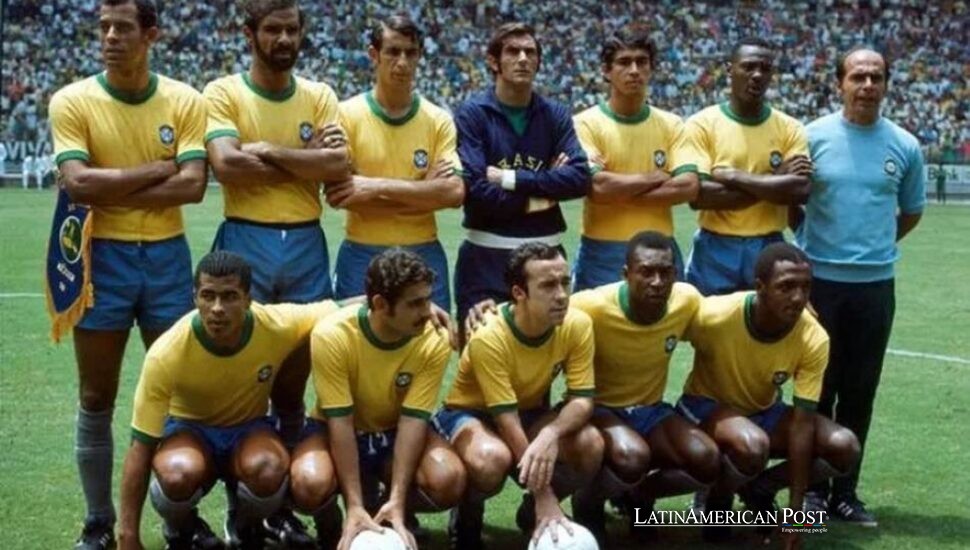
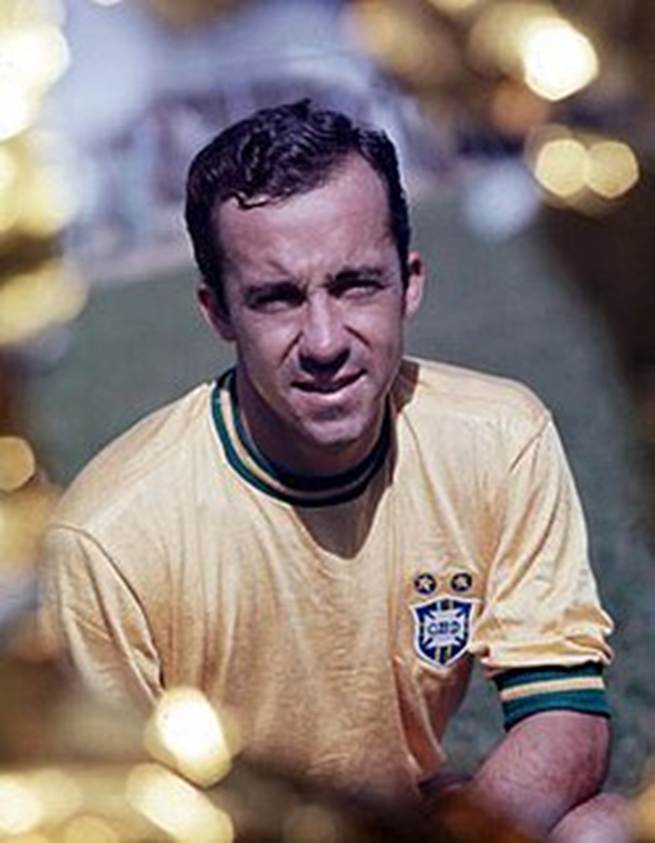
Eduardo Gonçalves de Andrade, born in Belo Horizonte in 1947, was already a world champion before he had finished being young. He was 23 when Brazil won the 1970 World Cup in Mexico with a side so luminous it still feels less like a team than a memory people keep polishing. Pelé was there, of course. Jairzinho, Rivelino, Gérson. And Tostão, the sharp little forward with the restless mind, playing as a center forward even though he had spent most of his career as something subtler, a hybrid of organizer and attacker.
Now 79, Tostão told EFE he began playing “since childhood, both on grass and on futsal courts.” That detail matters. Futsal is where Brazil teaches the body to think quickly. It is where tight spaces make imagination practical. Before European academies turned talent into diagrams, Brazilian neighborhoods had already made technique a survival language.
The nickname came early and with a teasing warmth. He played with older boys, and they called him Tostão, after an old coin of little value. The joke did not age well. He became priceless to Cruzeiro, then to Brazil, then to the sport’s mythology.
In the 1960s, Cruzeiro was not yet the national giant it would become. Tostão told EFE that the club was then “barely known in Belo Horizonte.” Yet it was there, in a blue shirt, that he helped alter Brazilian football’s geography. Until then, the country’s glamour leaned heavily toward Rio de Janeiro and São Paulo, toward Santos, Flamengo, Botafogo, Corinthians, Palmeiras. Cruzeiro’s rise suggested another Brazil could speak.
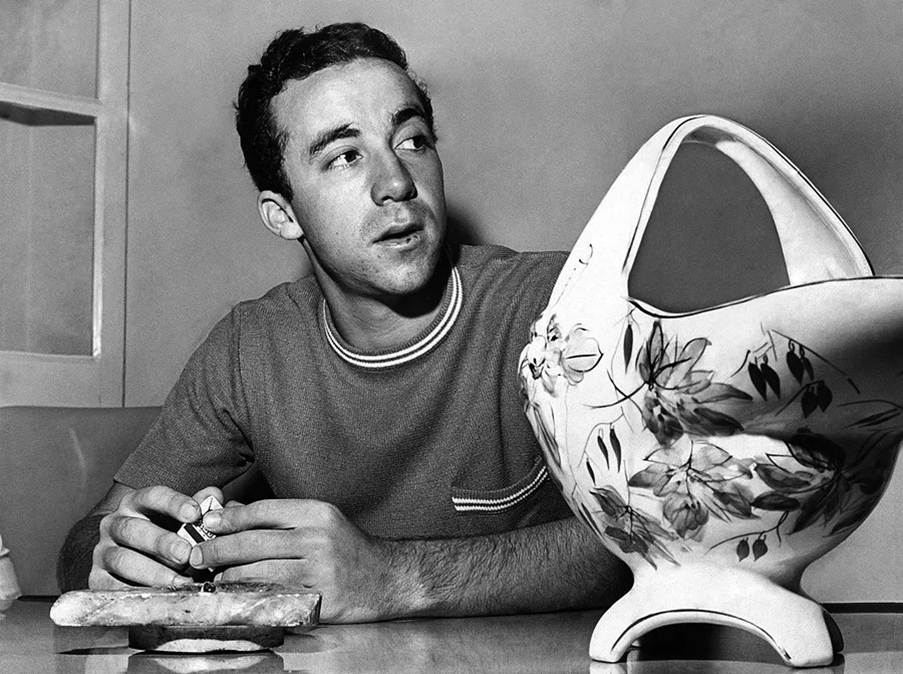
When Belo Horizonte Beat Pelé
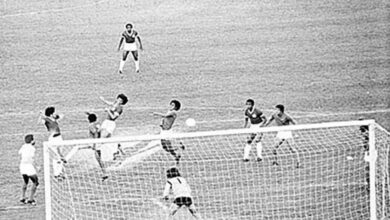
The turning point came in the 1966 Taça Brasil, the era’s main national tournament. Cruzeiro, powered by a young core that included Tostão, Dirceu Lopes, Piazza, and Natal, faced Santos, Pelé’s Santos, the imperial side with Pepe, Zito, and company. In the first leg of the final, Cruzeiro won 6-2. It was not just a victory. It was a disturbance in the order of things.
Tostão scored in that match and again in the return leg at São Paulo’s Pacaembu stadium, where Cruzeiro won 3-2. For Latin America, this is the kind of football story that matters beyond the scoreboard. Provincial ambition is challenging metropolitan authority. Youth disturbing hierarchy. A smaller name is forcing the nation to widen its map.
Pelé had endured a bitter 1966. Brazil, defending champion, crashed out of the World Cup in England in a tournament remembered in Brazil for the violence used against it. Four years later in Mexico, the story reversed into radiance. The 1970 team became the perfect Latin American export: beautiful, improvised, disciplined without seeming rigid, joyful but lethal. A team that let the world imagine Brazil as rhythm, color, and genius while the country itself lived under a military dictatorship.
That contradiction is central to the Latin American football myth. On the field, freedom. Outside it, censorship, inequality, repression, fear. The 1970 Brazil team gave the nation joy, but it also became useful to power. Football in Latin America has always carried that double burden: it liberates the poor in imagination, only to risk being harvested by the powerful as proof that all is well.
Tostão almost missed Mexico entirely. In September 1969, while playing against Corinthians on a rain-soaked field, he took a powerful ball to the right eye from defender Ditão. The injury caused a detached retina. He underwent surgery in the United States and spent six months completely inactive.
“There were great doubts about whether I would be fit to play,” he told EFE. “I trusted the doctor’s authorization and went ahead.” The doctor, Roberto, traveled from Houston to Mexico, visited him, and attended every World Cup match, Tostão recalled. After Brazil beat Italy 4-1 in the final and became three-time world champions, Tostão gave his winner’s medal to the physician who had operated on his eye.
It is a gesture that cuts through the usual athlete biography. Medals are supposed to certify glory. Tostão gave his away to the man who had made vision possible.
The Second Life After the Roar
The cruel turn came quickly. By 1972, Tostão was playing for Vasco da Gama in Rio de Janeiro. His retina detached again. He returned to the United States for another operation, but this time, doctors urged him to stop. He retired at 26.
In modern football, 26 is when a star is entering full command of his powers. Endorsements peak. Transfers grow. The myth expands. Tostão stepped out.
What followed was not a sentimental comeback, but something rarer. He became a doctor. “At that time, football was only a diversion,” he told EFE. “I hesitated between medicine and psychology, and decided to become a doctor. I liked it very much.”
He practiced medicine and even taught. For a while, he watched football only on television. “I wanted to separate one career from the other,” he told EFE.
That separation says much about him, and about Latin America’s old relationship with football fame. The region can turn athletes into saints, then abandon them when their bodies break. Tostão chose a second identity before the first one could devour him. Medicine gave him distance, seriousness, and another form of usefulness. Yet the anxiety of treating gravely ill patients eventually wore on him. Nostalgia for football returned. He left medicine to become a sports columnist, a role he still holds at Folha de S.Paulo.
This final transformation may be the most Brazilian of all. Tostão became not only a former player, but an interpreter of the game’s soul. He had known football as a street child, prodigy, champion, patient, exile from the pitch, and observer. He understood that beauty is fragile because he had lost his career through the thin membrane of an eye.
For Latin America, his story lands today with new force. The continent still produces genius from scarcity, still turns children from working-class neighborhoods into national symbols, still asks athletes to carry dreams that governments fail to satisfy. But Tostão’s life warns against reducing people to their gifts. A footballer is not only a body for public joy. He is also a mind, a worker, a citizen, a person who must survive after applause.
The boy named after a small coin became proof that value is not fixed by origin, nickname, or even by the years taken away. Brazil remembers Tostão for Mexico 1970. Latin America should also remember the doctor who came after, the columnist who stayed, and the man who learned that seeing clearly can cost everything.
Also Read: Mexico’s Big Wave Moment Revives an Old Question About Its Birthplace